





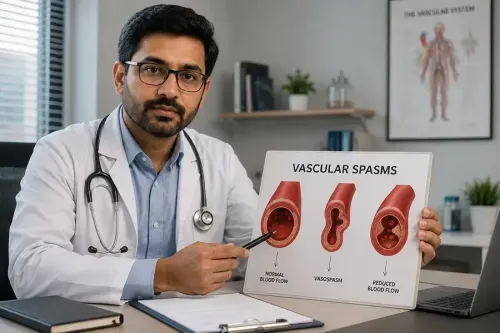
Types of Vascular Spasms: Cerebral, Coronary & Peripheral
How Vasospasms Affect Blood Flow in the Brain, Heart & Skin
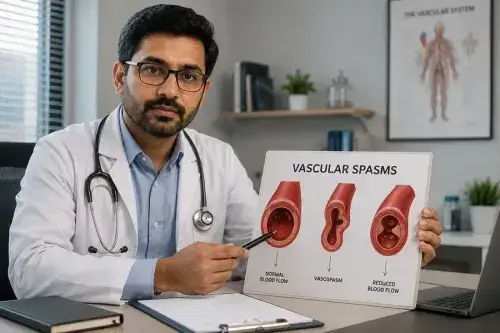
Arteries transport oxygen-rich blood to various parts of the body. Vascular spasm, or vasospasm, occurs when an artery suddenly constricts, leading to a narrowing that reduces blood flow. This can be serious, particularly when it takes place in the brain or heart. Occasionally, vasospasm also denotes the narrowing of small blood vessels in the hands.
Where Can Vasospasm Happen in the Body?
Vasospasm can affect arteries anywhere in the body. It most often occurs in large arteries of the brain (cerebral artery vasospasm) and the heart (coronary artery vasospasm). Smaller arteries, like those in the hands, feet (Raynaud's phenomenon), and the nipples of breastfeeding women, can also be affected. Vasoconstriction is a broader term that includes both normal and abnormal vessel narrowing and is not defined solely by duration.
What Triggers a Vascular Spasm?
Various factors trigger vascular spasms that occur in different parts of the body and often lead to serious symptoms. Each type has its cause, set of symptoms and treatments.
1. Cerebral Artery Vasospasm
This type of vasospasm often develops after a brain artery bursts. It causes bleeding between the brain and the skull, known as a subarachnoid haemorrhage.
- Causes: People with a brain injury or aneurysm commonly suffer from it. The risk increases several days after the bleeding has stopped. Cerebral vasospasm typically develops 3 to 14 days after a subarachnoid haemorrhage caused by a ruptured aneurysm.
- Symptoms: The person may seem drowsy or less responsive, which can indicate brain damage. This may be accompanied by symptoms such as weakness in the arms or legs, vision loss, and decreased alertness.
- Treatment: Treatment is managed in a hospital setting and may include carefully monitored blood pressure augmentation, intravenous fluids, and vasodilator therapy such as nimodipine, under specialist supervision.
2. Coronary Artery Vasospasm
Coronary artery vasospasm is a sudden tightening of the arteries that carry blood to the heart. This spasm briefly reduces blood flow. However, it is not always linked to blocked arteries and can happen even in people without common heart disease risks.
- Causes: Smoking, cold weather, high emotional stress, or the use of stimulant drugs like cocaine or amphetamines triggers coronary artery vasospasm. Sometimes, it happens without any clear reason.
- Symptoms: The main symptom is severe chest pain known as angina, which feels like burning, pressure, squeezing, or fullness. Pain can spread to the arms, shoulders, neck, jaw, or back. The spasm usually happens while the body is at rest, often overnight or early in the morning.
- Treatment: Treatment may include calcium channel blockers, nitrates, stopping tobacco and recreational drugs, and losing weight. In rare cases where coronary vasospasm causes recurrent life-threatening arrhythmias despite optimal medical therapy, an implantable cardioverter-defibrillator may be considered.
3. Nipple Vasospasm
Nipple vasospasm is a painful condition where the nipple suddenly tightens and changes colour, often turning white, blue, and then red. The pain can stay in the nipple or spread deep into the breast and may last for over 30 minutes.
- Causes: Nipple vasospasm often happens when a baby does not latch properly during breastfeeding. It can also be triggered by cold, stress, smoking, nipple injury, or in women who have Raynaud’s phenomenon.
- Symptoms: The person may feel burning, sharp pain, or itching in the nipple shortly after feeding or between feeds. The pain usually occurs when the blood returns to the nipple as the spasm stops.
- Treatment: Treatment involves keeping nipples warm, avoiding triggers like tobacco, and using medicines like nifedipine or sometimes antidepressants if needed.
4. Raynaud’s Phenomenon
Raynaud’s phenomenon is a condition in which there is reduced blood flow to fingers and toes, ears, nose, knees, or nipples due to spasms in small blood vessels. This phenomenon can happen on its own (primary) or with other diseases like lupus, scleroderma, or rheumatoid arthritis (secondary).
- Causes: Cold, stress or strong emotions usually trigger these spasms in the small arteries of the hands and feet. The primary cause is unknown, but the secondary type is linked to other health problems like scleroderma.
- Symptoms: Fingers and toes become numb and painful and change colour from white to blue, then red. Nipples may also hurt, itch, or change colour, especially in breastfeeding women.
- Treatment: Treatment includes keeping warm, stopping tobacco, taking calcium channel blockers, and, in some cases, surgery or botulinum toxin injections.
- How to Diagnose Vasospasm?
Doctors use scans such as ultrasound, CT perfusion, and angiography to check blood flow in large arteries. Symptoms and medical history help diagnose small artery vasospasms, like Raynaud's or nipple vasospasms.
Avoiding known triggers and following treatment plans can significantly improve recovery and reduce the risk of future vasospasms. Contact your doctor immediately if symptoms continue or worsen.
Disclaimer: This article is intended for general educational and informational purposes only. Vascular spasms can vary widely in cause, severity, and management, and treatment decisions should always be made by a qualified healthcare professional based on an individual’s medical history and condition.
Also Read:
→ Vascular Spasm in Haemostasis
→ Vascular Tone and Its Impact on Heart Health
→ Anatomy of the Uvea : How the Vascular Tunic Supports Vision


Health Insurance Coverage for pre-existing medical conditions is subject to underwriting review and may involve additional requirements, loadings, or exclusions. Please disclose your medical history in the proposal form for a personalised assessment.
This FAQ page contains information for general purpose only and has no medical or legal advice. For any personalized advice, do refer company's policy documents or consult a licensed health insurance agent. T & C apply. For further detailed information or inquiries, feel free to reach out via email at marketing.d2c@starhealth.in







