





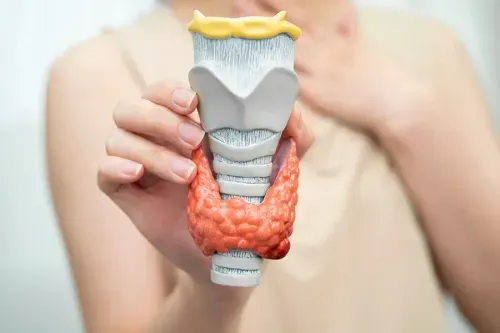
What are the Risk Factors for Thyroid Cancer?
Thyroid Cancer: Risk Factors by Age, Family & Health
A risk factor indicates signs and patterns that increase the chances of developing cancer. For instance, some potential risk factors can be associated with a certain kind of condition, behaviour or even substance.
Thyroid cancer may develop at any stage. However, it is commonly diagnosed in adults, with incidence increasing with age, particularly after 55 years, with women at a greater risk than men.
Know the Different Risk Factors of Thyroid Cancer
Over the years, medical researchers have identified several strong risk factors linked with developing thyroid cancer. These are as follows:
1. Exposure to Ionising Radiation
It is the most prominent risk factor for a person who may develop thyroid cancer. The age at which an individual is exposed to harmful ionising radiation affects the chance of developing the illness.
Children who undergo radiation therapy to the neck and head remain at a higher risk of falling victim to thyroid cancer. Thyroid cancer related to radiation exposure may develop after a latency period of several years to decades, with risk persisting throughout life.
2. Non-cancerous Conditions of the Thyroid
If a patient has a history of benign or non-cancerous thyroid conditions, their risk of being afflicted with thyroid cancer increases. Some of these conditions are:
- Inflammation of the thyroid
- Goitre (an enlarged thyroid as compared to its usual size)
- Thyroid nodules
3. Family History of the Specific Cancer
When someone has a parent or sibling with thyroid cancer, they are at a greater risk of getting this disease. Doctors have assumed that this risk factor is possibly due to specific genetic conditions.
4. Hereditary Conditions
Various types of thyroid cancer can occur from the following typical hereditary conditions:
- The most common subtype among the conditions is MEN2A, which can lead to medullary thyroid cancer accompanied by tumours in the parathyroid gland and the adrenal gland.
- MEN2B is another inherited mutation that can cause medullary thyroid cancer with tumours in the nerve cells.
- An individual can suffer from familial medullary thyroid cancer syndrome, which is another typical hereditary condition that causes cancer.
5. Obesity
A person can also become vulnerable to developing thyroid cancer if their body mass index (BMI) increases much above the healthy weight range. However, it is just an observation, as there is no clear reason for this outcome.
6. Tall Height
Some studies have observed an association between greater adult height and thyroid cancer risk, but this is not a well-established or clinically actionable risk factor. It may have something to do with their hormone levels throughout life, such as in childhood, adolescence and adulthood.
7. Acromegaly
Acromegaly is an uncommon health condition that may develop when a person's body produces excessive growth hormone. This increased hormonal supply forces the bones and organs, including the thyroid gland, to grow more than the typical dimensions and as a result, these may become deformed. Individuals with acromegaly may develop thyroid cancer over time.
Additional Possible Factors
Other than the above-mentioned factors, more elements have been associated with thyroid cancer. However, significant research is necessary to clearly explain their role in developing cancer.
- Iodine-deficient diet
- Very high consumption of raw cruciferous vegetables may affect thyroid function, but there is no strong evidence linking normal dietary intake to thyroid cancer
- Greater levels of TSH or thyroid-stimulating hormone
- Diabetes
- Female predominance in thyroid cancer suggests a role for hormonal and reproductive factors, but specific causes and mechanisms remain unclear
Symptoms of Thyroid Cancer
Most thyroid cancers do not cause symptoms early in the initial stages. However, some may experience symptoms such as:
- Persistent cough
- A lump (nodule) in the neck
- A feeling that close-fitting shirt collars are becoming too tight
- Voice changes
- Difficulty breathing
- Difficulty swallowing
- Swollen lymph nodes in your neck
- Neck and throat pain
It is recommended that individuals experiencing any of the above symptoms should consult with a health care provider.
Nonetheless, researchers have not found any direct link between thyroid cancer and lifestyle choices like drinking alcohol or smoking.
You can lower the risks of thyroid cancer by consulting a healthcare professional. Additionally, you should prioritise maintaining a healthy weight and reversing diabetic conditions, if applicable.
Disclaimer: This article is intended for general informational and educational purposes only. If you have concerns about thyroid health, experience symptoms, or have a personal or family history of thyroid disease, consult a qualified healthcare professional for personalized evaluation and advice.
Also Read:
→ Risk Factors of Communicable Diseases
→ Risk Factors of Coronary Artery Disease
→ Risk Factors of Dengue Fever
→ Risk Factors of Diabetic Foot
HELP CENTRE
Confused? We’ve got the answers
We’re Star Health. We offer the coverage that’s designed to help keep you healthy. It's the care that comes to you, and stays with you.
The tests and procedures used to diagnose thyroid cancer include physical exam, ultrasound imaging, imaging tests (CT and MRI), genetic testing, Fine-Needle Aspiration (FNA) Biopsy, etc.
Surgical Recovery: After thyroid surgery, patients can return to their daily activities within 2 to 6 weeks, depending on the type of surgery, complications, and individual health factors.
Long-Term Management: If the thyroid is removed, lifelong thyroid hormone medication is required. Recovery also involves regular follow-up appointments for blood tests and monitoring to ensure the cancer remains in remission and to adjust medication levels.
Popular Topics
People Also Search For


Health Insurance Coverage for pre-existing medical conditions is subject to underwriting review and may involve additional requirements, loadings, or exclusions. Please disclose your medical history in the proposal form for a personalised assessment.
This FAQ page contains information for general purpose only and has no medical or legal advice. For any personalized advice, do refer company's policy documents or consult a licensed health insurance agent. T & C apply. For further detailed information or inquiries, feel free to reach out via email at marketing.d2c@starhealth.in







