





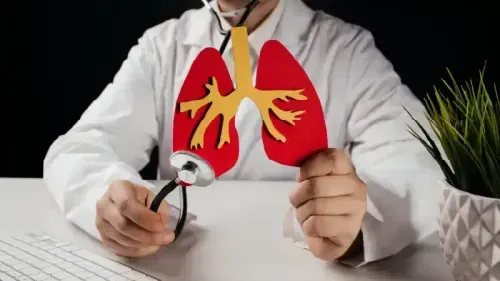
Pulmonary Haemorrhage (Bleeding into the lung)
Pulmonary Haemorrhage Symptoms Explained
Pulmonary haemorrhage refers to bleeding into the air spaces of the lung. It can be massive and sudden or develop gradually. If not detected and treated at the right time, it can cause severe health hazards. Numerous conditions, such as autoimmune diseases, infections, heart problems, coagulation issues, and toxic exposures, can cause pulmonary haemorrhage.
People of all ages can be affected, though children and those with specific underlying conditions are more likely to experience it. Identifying the classical triad supports diagnosis, but absence of one or more components does not exclude pulmonary haemorrhage. Keep reading to understand the triad of symptoms of pulmonary haemorrhage.
What is Pulmonary Haemorrhage?
Pulmonary haemorrhage refers to bleeding that originates from the lungs' vasculature into the airways or air sacs (alveoli). It is a serious syndrome that can be acute and life-threatening or, in rarer cases, chronic. It most commonly occurs when the delicate capillaries surrounding the lung's air sacs (alveoli) are damaged, allowing blood to fill the alveolar spaces. Bleeding can also originate from larger vessels or lesions in the bronchi.
The onset of Pulmonary haemorrhage can be sudden and severe, constituting a life-threatening medical emergency. In some instances, it may present with milder, recurrent episodes, but any pulmonary bleeding requires immediate medical evaluation due to its potential severity.
What are the three symptoms of Pulmonary Haemorrhage?
The following three symptoms is associated with pulmonary haemorrhage:
Haemoptysis, or Coughing Up Blood
Although it may not be present in approximately one-third of adult cases and up to half of paediatric cases, this is the most identifiable sign.
Anaemia, or Lack of Iron
Anaemia due to blood loss” or “a fall in haemoglobin/haematocrit secondary to pulmonary bleeding”.
Iron deficiency may develop secondarily in chronic or recurrent cases (e.g., idiopathic pulmonary hemosiderosis).
Pulmonary Infiltrates
Diffuse or patchy infiltrates, which indicate blood accumulation within the lung tissue, are visible on chest X-rays or CT (computed tomography) scans.
Other symptoms may include the following:
- Shortness of breath
- Cough
- Fever
- Fatigue
- Poor growth in children
- Acute respiratory failure (in severe cases).
The presentation can be insidious or sudden, and massive haemorrhage may lead to rapid cardiorespiratory compromise.
What are the Causes of Haemorrhage?
Pulmonary haemorrhage occurs due to several conditions. Here are some of them:
Autoimmune Disorders
Autoimmune disorders like systemic vasculitides (e.g., Goodpasture syndrome, systemic lupus erythematosus) cause inflammation and damage to lung blood vessels, which can lead to pulmonary haemorrhage.
Cardiac Disorders
Mitral stenosis, which increases pressure in the lung circulation and predisposes it to bleed, is another reason for pulmonary haemorrhage.
Coagulation Disorders
Coagulation diseases or anticoagulant medications can lead to impaired blood clotting, increasing the risk of pulmonary haemorrhage.
Infections
Bacterial, viral, or fungal infections (e.g., tuberculosis, leptospirosis) can damage lung tissue directly, leading to pulmonary haemorrhage.
Toxic Exposures
Inhalation of certain chemicals, drugs (e.g., cocaine, some medications), or vaping-related lung injury can increase the risk of pulmonary haemorrhage.
Transplantation
Both hematopoietic stem cell and solid organ transplants can increase the risk of haemorrhage.
Sometimes, no specific cause is found, especially in children (idiopathic pulmonary hemosiderosis). However, identifying the underlying cause is critical for guiding treatment and preventing recurrence.
Complications of Pulmonary Haemorrhage
Complications of pulmonary haemorrhage can be life-threatening and severe, highlighting the critical nature of this medical condition. The following are the primary complications associated with pulmonary haemorrhage:
- Respiratory Failure: This is the most immediate and serious complication. It occurs when blood fills the air sacs (alveoli), preventing oxygen exchange and leading to hypoxia. This can progress to Acute Respiratory Distress Syndrome (ARDS).
- Rebleeding: Even after primary control of haemorrhage, there is a significant risk of rebleeding especially in cases of bronchiectasis or arteriovenous malformations.
- Infection: Blood present in the airways and lungs can develop infections such as pneumonia. This risk is higher in patients who require mechanical ventilation and prolonged intubation.
- Hemodynamic Instability: Massive pulmonary haemorrhage results in significant blood loss, which can lead to hypovolemic shock.
- Cardiovascular Complications: Severe pulmonary haemorrhage can cause acute right ventricular strain or failure (acute cor pulmonale) due to a sudden increase in pulmonary vascular resistance.
- Mortality: Even after advancements in healthcare facilities and management, massive pulmonary haemorrhage remains associated with noticeable mortality rates.
- Neurological Complications: Severe hypoxia due to respiratory failure can lead to neurological damage, including hypoxic brain injury.
How to Diagnose Pulmonary Haemorrhage?
Here are some of the diagnostic methods that help detect pulmonary haemorrhage:
History and Physical Examination
Assessing risk factors, underlying diseases, and symptoms such as haemoptysis, anaemia, and respiratory distress can help detect haemorrhage.
Imaging Test
Chest X-ray and CT scans are essential to detect pulmonary infiltrates. CT may show ground-glass opacities or areas of consolidation, indicating blood in the alveoli.
Laboratory Tests
Complete blood count to assess anaemia, coagulation profile, and inflammation or autoimmune disease markers can determine whether you have a pulmonary haemorrhage.
Additional Tests
Depending on the suspected cause, tests for autoimmune markers, infectious agents, or toxic exposures may be performed.
What are the Treatment Methods for Pulmonary Haemorrhage?
The treatment procedures for pulmonary haemorrhage include the following:
Bronchoscopy
Bronchoscopy helps pinpoint the source of lung bleeding and, in some cases, allows direct treatment by applying agents like adrenaline that constrict blood vessels to control bleeding. It also guides doctors in locating and blocking (embolizing) the bleeding vessel, effectively reducing or stopping the haemorrhage.
Embolization
Embolization is a minimally invasive procedure in which a doctor inserts a thin catheter into a blood vessel, usually through the groin, and guides it to the bleeding area in the lungs. Special materials like coils or plugs are then released through the catheter to block the targeted vessel, effectively stopping the bleeding and preventing further blood loss.
Treating the Underlying Cause
Doctors prescribe antibiotics for infections (e.g., penicillin for leptospirosis). If autoimmune disorders cause haemorrhage, immunosuppressive therapy, such as corticosteroids, cyclophosphamide, etc., is provided.
Correcting coagulation disorders by reversing anticoagulation or treating underlying bleeding disorders can also help manage pulmonary haemorrhage.
Surgery
Surgery is performed only if less invasive treatments like bronchoscopy and embolization fail to control lung bleeding. In such cases, removing the tumour or lesion responsible for the bleeding may be necessary to resolve the problem.
Is Pulmonary Haemorrhage Curable?
The cure of pulmonary haemorrhage depends on the severity of the condition, the underlying cause, and the timing of treatment. Patients can often recover completely if the underlying cause (such as an infection, autoimmune disease, or drug reaction) is found and treated quickly.
For instance, prompt antibiotic treatment can result in complete recovery if the pulmonary haemorrhage is caused by severe leptospirosis (Weil's disease). However, the prognosis may be less favourable and supportive care or long-term management may be required if the bleeding is severe, frequent, or linked to chronic conditions.
Early detection and effective treatment of pulmonary haemorrhage are essential to reduce death rates and avert chronic problems. Knowing the signs and symptoms of pulmonary haemorrhage will help individuals appropriately manage the condition.
Disclaimer: This information is for educational purposes only and is not a substitute for professional medical advice, diagnosis, or treatment. Pulmonary haemorrhage is a serious condition that requires evaluation by a qualified healthcare professional. Always consult a doctor for medical concerns or symptoms. Seek immediate medical attention if you experience coughing up blood, severe breathlessness, or sudden worsening of symptoms.
Also Read:
→ What is Stage 4 IgA Nephropathy
Popular Topics
People Also Search For


Health Insurance Coverage for pre-existing medical conditions is subject to underwriting review and may involve additional requirements, loadings, or exclusions. Please disclose your medical history in the proposal form for a personalised assessment.
This FAQ page contains information for general purpose only and has no medical or legal advice. For any personalized advice, do refer company's policy documents or consult a licensed health insurance agent. T & C apply. For further detailed information or inquiries, feel free to reach out via email at marketing.d2c@starhealth.in







