





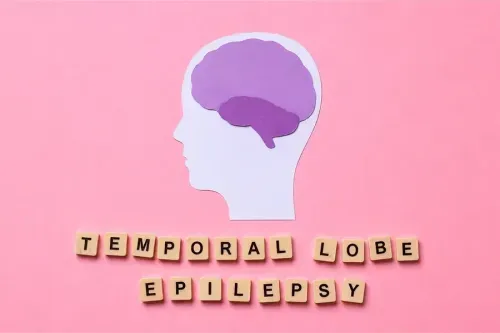
What is Temporal Lobe Epilepsy?
Temporal Lobe Epilepsy: What You Need to Know
If an individual suddenly loses track of time, feels a strange emotion, or notices a familiar smell that is not really there-just before their body becomes still or starts to jerk-it could be a sign of temporal lobe epilepsy (TLE).
TLE is among the most prevalent forms of epilepsy, with roots in the temporal lobes of the brain-the areas located behind your temples and dealing with memory, speech, and vision. Learning about this condition enables individuals to cope with it more effectively and live more assertively despite its difficulties.
Keep reading to understand temporal lobe epilepsy, its symptoms and much more.
What Do You Mean by Temporal Lobe Epilepsy?
Temporal lobe epilepsy (TLE) is the primary type of focal epilepsy, in which seizures begin in the temporal lobes of the brain. These areas manage emotions, memory, speech, and sensory processing. The seizures can encompass fear or happiness, ranging from brief alertness to impaired consciousness and repetitive movements.
TLE seizures most commonly present as focal aware or focal impaired awareness seizures, but they may also evolve into focal to bilateral tonic-clonic seizures. Antiseizure medications are the first-line treatment; however, in drug-resistant cases, options may include epilepsy surgery or neuromodulation therapies such as vagus nerve stimulation or responsive neurostimulation.
What is the Aura of Temporal Lobe Epilepsy?
An aura in temporal lobe epilepsy is usually the initial sign of a focal seizure. While usually considered a warning sign, an aura is a focal aware seizure itself. Although auras represent focal aware seizures, they are often not captured on routine scalp EEG due to their brief duration and deep temporal lobe origin.
When the temporal lobe becomes involved, auras can take the form of vivid, uncontrollable memories (forced memories), strong feelings of fear or happiness, or abnormal sensory sensations such as unusual odours, tastes, or a growing sensation in the stomach.
Not everyone who has temporal lobe epilepsy has auras and may not remember having the phase afterwards.
What are the Causes of Temporal Lobe Epilepsy?
The causes of temporal lobe epilepsy are as follows:
- Sclerosis of the Hippocampus: One of the most frequent causes is degeneration and loss of hippocampal neurones and glial cells, accompanied by scarring (gliosis).
- Focal Cortical Dysplasia: Abnormalities in structure resulting from the abnormal development of brain cells can interfere with the normal neural circuits and cause seizures.
- Brain Injuries: Traumatic brain injury, particularly during childhood, can destroy temporal lobe structures and make it more probable to develop epilepsy.
- Infections: Infection of the central nervous system, including encephalitis, meningitis, or brain abscess, may inflame or scar the brain tissue and cause seizures.
- Vascular Abnormalities: Stroke or arteriovenous malformations may jeopardise blood flow, injuring brain tissue in the temporal lobe.
- Brain Tumours and Lesions: Tumours in or around the temporal lobe can disrupt its function and induce seizure activity.
- Genetic Factors: Certain individuals are born with genetic variations that increase their risk for seizures.
- Childhood Febrile Seizures: In particular, complex or long febrile seizures during infancy have a strong link with subsequent development of TLE.
- Severe or Long Seizures (Status Epilepticus): Prolonged or recurrent seizures in early life, including episodes meeting criteria for status epilepticus, may increase the risk of later epilepsy, though the association with TLE is complex and not always direct.
- Family History: A genetic susceptibility can be passed through families, making one more likely to develop TLE.
- Early Brain Infections or Injuries: Encephalitis, meningitis, or traumatic brain injury in childhood dramatically increase susceptibility.
What are the symptoms of temporal lobe epilepsy?
Temporal lobe epilepsy has a variety of symptoms that can show up before, during, and after a seizure. The following are the most important symptoms of this disorder:
- Early symptoms, called auras, can consist of déjà vu, jamais vu, spontaneous memories, strong emotions (fear, happiness, worry), unusual sensations (a rollercoaster-like feeling in the stomach), or visual, olfactory, gustatory, or auditory hallucinations.
- At the time of a seizure, patients can have a blank appearance, loss of consciousness, lip smacking, chewing, swallowing, repetitive hand or finger motion, abnormal head or eye movements, and rhythmic muscle contraction.
- Sensory symptoms include numbness, tingling, or a crawling feeling on the skin.
- Autonomic symptoms include nausea, abdominal pain, tachycardia, dilated pupils, sweating, and flushing.
- Post-seizure manifestations are frequently characterised by confusion, sleepiness, transient speech impairment, and memory loss, with some unaware that a seizure happened.
Temporal lobe epilepsy is a multifaceted neurological disorder characterised by unique sensory, emotional, and behavioural manifestations. Prompt identification of auras and seizure patterns can significantly assist in diagnosis and treatment. With adequate therapy, many people can successfully manage symptoms and live a quality life.
Reader information: This article is intended for general informational and educational purposes only and does not constitute medical advice. It is not a substitute for professional diagnosis, treatment, or medical consultation. Epilepsy and neurological conditions vary widely between individuals, and symptoms, causes, and treatment options may differ. Readers should not use this information to diagnose or treat a health condition. Always seek the advice of a qualified neurologist or healthcare professional with any questions regarding a medical condition or before starting, changing, or stopping any treatment.
Also Read:
→ 10 Common Diseases of the Nervous System
→ What Can Whole Exome Sequencing Diagnose
→ What Diseases Have Been Cured by CRISPR
→ Transient Ischaemic Attack Coverage Importance


Health Insurance Coverage for pre-existing medical conditions is subject to underwriting review and may involve additional requirements, loadings, or exclusions. Please disclose your medical history in the proposal form for a personalised assessment.
This FAQ page contains information for general purpose only and has no medical or legal advice. For any personalized advice, do refer company's policy documents or consult a licensed health insurance agent. T & C apply. For further detailed information or inquiries, feel free to reach out via email at marketing.d2c@starhealth.in







