





What is the Best Treatment for Vitiligo?
Vitiligo Treatments: Best Options & New Therapies
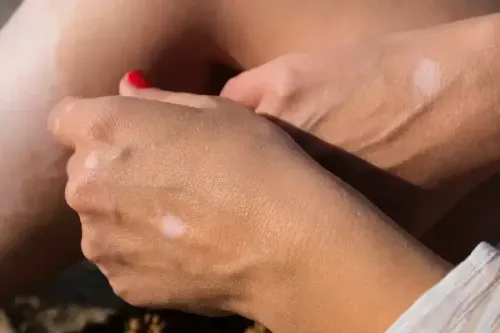
Vitiligo is a skin condition where pigment cells fail to function, causing white spots on the skin. While there’s no singular best treatment, the right approach to do so depends on individual factors like the severity, location, and progression of the condition.
The main goals of vitiligo treatment are to slow or halt its spread, restore skin colour, and manage symptoms. Since each vitiligo case is unique, treatment plans are often personalized for the best possible outcome.
Keep reading to explore the symptoms and most effective treatment options available!
What are the symptoms of vitiligo?
The main symptoms of vitiligo are:
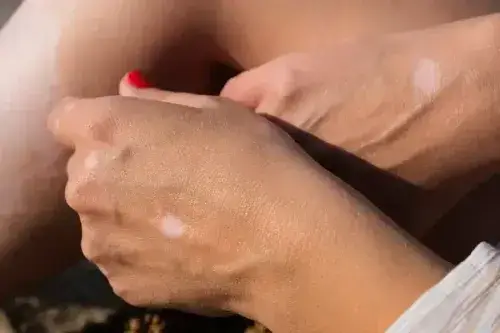
- Patchy loss of skin colour. This first appears on the hands, face and areas around the body openings.
- Premature whitening or greying of the hair on your scalp, eyelashes, eyebrows or beard.
Depending on the type of vitiligo you have, it may affect:
- One or only a few areas of the body
- Many parts of the body
- Nearly all skin surfaces.
- Only one side or part of the body
- The face and hands.
What are the Treatment Options for Vitiligo?
Choosing the right treatment for vitiligo depends on several factors. These can include your age, the extent of the skin damage, where the discoloration appears, the speed of its progression, and how it impacts your daily life.
Here are some of the most common treatment options:
1. Medications
No drug can prevent the entire loss of pigment cells (melanocytes), but certain medications can restore colour, such as:
- Anti-inflammatory Creams: Topical corticosteroids are frequently applied to depigmented skin and could even replace the pigment, particularly in the early stages. However, visible improvements can take several months. Side effects could include possible skin thinning and stretch mark-like lines.
Lower strength preparations are usually employed in children or those with very large affected areas. More severe cases may involve oral or injected corticosteroids. - Immune-modulating Creams: Calcineurin inhibitors like tacrolimus and pimecrolimus may help restore pigment, especially on the face and neck, where the skin is thinner.
These are suitable for treating smaller patches. However, the FDA has issued a warning about the potential risk of lymphoma and skin cancer with long-term use.
2. Therapies
- Narrowband UVB Therapy: Narrowband UVB therapy has proven beneficial in halting or reducing the progression of vitiligo. It is more effective when combined with corticosteroids or calcineurin inhibitors. Patients are usually treated two to three times weekly.
Improvement can be observed as early as 1–3 months, and optimal outcomes may take six months or longer. Home UVB therapy machines are also an alternative for people who can't regularly travel to a clinic. Talk to your physician if home treatment is an acceptable option for you.
Potential shared side effects of the treatment include mild burning, itching, or redness of the skin, which will typically subside within a few hours following each session. - Psoralen and Light Therapy (Photochemotherapy): This treatment, also called PUVA treatment, combines a plant chemical called psoralen with UVA light exposure. Psoralen is ingested or placed on depigmented skin prior to UVA light exposure. The treatment can return pigment to lighten areas.
However, due to its complexity and potential side effects, modern practices have largely replaced it with the more convenient and effective narrowband UVB therapy. - Depigmentation Therapy: Depigmentation is an option for long-standing vitiligo patients who have not responded to other treatments. The method involves applying a depigmenting agent to the uninvolved skin and gradually reducing its pigmentation to a level that can be camouflaged with the involved spots.
The therapy is typically performed once or twice daily for many months, nine or more. While this can achieve a uniform skin tone, it is permanent and may lead to side effects like redness, extreme dryness, swelling, and itching.
3. Surgical Treatment
When medication and light therapy do not work, surgery might be a possibility for those with stable vitiligo. These procedures attempt to restore colour and redistribute skin pigmentation:
- Skin Grafting: This technique transplants small pieces of normally coloured skin onto uncoloured skin. It works best on tiny patches. Side effects include scarring, infection, poor colour match, or a bumpy "cobblestone" texture.
- Blister Grafting: In this method, blisters are induced in pigmented skin with suction. The epidermis of the blisters is transferred to depigmented skin. Risks involve new vitiligo patches developing due to skin damage, scarring, and abnormal outcomes.
- Cellular Suspension Transplantation: This is another more recent method in which physicians take a sample of pigmented skin, isolate the cells that produce colour (melanocytes), and then put them in a solution of cells to prepare depigmented skin.
4. Promising Future Treatments
Researchers are continuously exploring new ways to manage vitiligo. Two notable potential therapies include:
- Afamelanotide: An implantable drug designed to stimulate melanocyte production. This peptide hormone is placed beneath the skin and may promote repigmentation by boosting melanocyte growth.
- Prostaglandin E2 Gel: This topical gel is currently under research and used to reconstruct pigment in spot or non-progressive vitiligo by controlling melanocyte behaviour.
Although vitiligo is not harmful physically, it has psychological and emotional impacts on a person. Talk to a medical professional if you find it challenging to deal with your skin's appearance. There isn't any cure for vitiligo, but a few treatments can manage its impact and restore your quality of life.
How to Manage Vitiligo and Prevent Complications?
Some of the essential tips to prevent vitiligo are as follows:
- Prioritise skin moisturise
- Protect your skin from the sun
- Avoid skin injuries and harsh chemicals
- Maintain a healthy immune system
- Manage stress
- Have an early diagnosis by your dermatologist
Reader information: The information provided in this article is for educational and informational purposes only and is not intended as medical advice. Vitiligo is a complex condition, and treatment responses can vary from person to person. The content presented here should not be used as a substitute for professional medical diagnosis, treatment, or guidance. Always consult a qualified dermatologist or healthcare professional for personalized advice, diagnosis, and treatment options.
Also Read:
→ What is the Latest Treatment for Erectile Dysfunction
→ What is the Treatment for Bronchioalveolar Carcinoma
→ What is the Treatment for High IgE Levels
→ What is the Treatment of OCD (Effective Methods & therapies)


Health Insurance Coverage for pre-existing medical conditions is subject to underwriting review and may involve additional requirements, loadings, or exclusions. Please disclose your medical history in the proposal form for a personalised assessment.
This FAQ page contains information for general purpose only and has no medical or legal advice. For any personalized advice, do refer company's policy documents or consult a licensed health insurance agent. T & C apply. For further detailed information or inquiries, feel free to reach out via email at marketing.d2c@starhealth.in







