





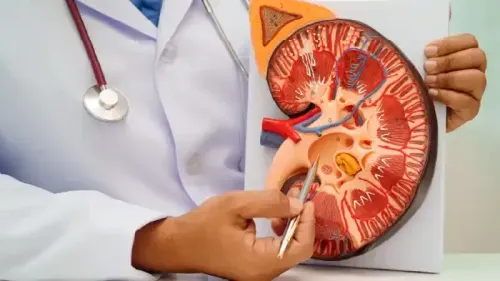
Vasa Recta: Key to Osmotic Balance and Urine Concentration
Exploring the Role of Vasa Recta in Renal Osmotic Gradient Maintenance
The role of vasa recta in maintaining the osmotic gradient is a remarkable illustration of the intricate physiology of the kidneys. The vasa recta preserve the medullary osmotic gradient through counter current exchange, thereby supporting the kidney’s ability to concentrate or dilute urine according to the body’s requirements. It ultimately maintains overall health and sufficient fluid balance.
What is Vasa Recta?
The vasa recta are a network of thin-walled, small blood vessels and capillaries that play a vital role in supplying blood to the inner medullary region of the kidneys. These vessels are highly permeable to both solutes and water, enabling them to deliver essential oxygen and nutrients to the medullary nephrons while simultaneously helping to remove excess water from the medullary interstitium.
These long, straight, U-shaped capillaries run parallel to the loop of Henle. Their unique hairpin structure slows blood flow, which helps preserve the osmotic gradient crucial for water reabsorption within the kidney.
How Do Vasa Recta Maintain the Medullary Osmotic Gradient?
They are essential to the kidneys' ability to regulate water balance and urine concentration. Vasa recta apply several mechanisms to maintain the medullary osmotic gradient, including:
1. Counter current Exchange
Counter current flow balances the osmotic gradient by limiting the exchange rate of solutes and water between the renal medulla and the blood. Vasa recta supply nutrients and oxygen from the blood flow to medullary tissues while removing waste. They carry away reabsorbed water and solutes from the medullary interstitium while preserving the osmotic gradient necessary for the function of the loop of Henle.
As blood ascends in the vasa recta from the medulla toward the cortex, its osmolarity gradually returns toward cortical (near-isosmotic) levels. At this point, interstitial fluid is isosmotic to the blood. As blood descends into the inner medulla via the vasa recta, its osmolality gradually increases from approximately 300 mOsm toward higher levels due to passive exchange with the hyperosmotic interstitium. As blood ascends back toward the cortex, solutes diffuse out and water diffuses in, returning blood osmolarity close to systemic levels (~300 mOsm). The process is called counter current exchange. As blood descends into the hyperosmotic medulla, it loses water and gains solutes, becoming more concentrated. As it ascends back to the cortex, it gains water and loses solutes, returning to its original osmolarity. This passive exchange prevents the rapid blood flow from washing away the osmotic gradient built by the Loop of Henle, thereby preserving the conditions necessary for the collecting duct to concentrate urine.
2. Preserving the Concentration Gradient
The unique structure of vasa recta is intimately connected with functions; the ascending and descending limbs support the counter exchange process. It slows the blood flow to reduce solute removal and boost exchange efficiency. Vasa recta improve the kidneys’ ability through this system to generate concentrated urine and recover water.
This process helps leverage the unique environment of the medulla and preserve vital electrolytes while removing wastes. This process carries a delicate balance of the osmotic gradient.
Which Factors Help Maintain an Increasing Osmolarity Towards the Inner Medullary Interstitium?
An increasing osmolarity towards the inner medullary interstitium impacts the kidneys’ function in urine concentration. Some factors help in maintaining:
- Counter exchange pattern in the vasa recta through exchanging water and solutes between the interstitial fluid and the blood.
- A proximity between the vasa recta and Henle's loop contributes to the maintenance of increasing osmolarity.
- Reabsorption of solutes and water through this counter-exchange process in Henle's loop helps in maintaining an osmolarity level.
Vasa recta play an important role in maintaining urine concentration in the kidneys. The descending vasa recta experience a net gain of solutes and loss of water. The ascending vasa recta experience a net loss of solutes and gain of water. This symmetrical exchange is what preserves the medullary gradient.
Reader Information: This article is intended for educational and informational purposes only. Physiological processes may vary based on individual health conditions, and clinical interpretations should always be made by qualified healthcare professionals. Readers are advised to consult a licensed physician or other qualified healthcare provider for personalized medical guidance, diagnosis, or treatment related to kidney function or any health concern.
Also Read:
→ Vasa Vasorum and its Function


Health Insurance Coverage for pre-existing medical conditions is subject to underwriting review and may involve additional requirements, loadings, or exclusions. Please disclose your medical history in the proposal form for a personalised assessment.
This FAQ page contains information for general purpose only and has no medical or legal advice. For any personalized advice, do refer company's policy documents or consult a licensed health insurance agent. T & C apply. For further detailed information or inquiries, feel free to reach out via email at marketing.d2c@starhealth.in







