





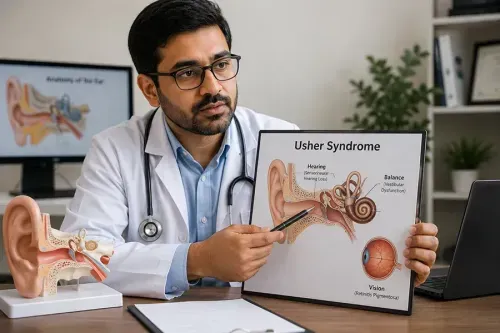
Usher Syndrome - Types, Causes, Diagnosis, Risk Factors
Usher Syndrome: Genetic Roots and Treatment Strategies
Usher syndrome is an inherited condition that leads to both hearing and vision loss, often beginning in childhood. Also known as Graefe-Usher syndrome, it significantly impacts sensory functions over time. Read on to explore the causes, types and more of this progressive genetic disorder.
Understanding Usher Syndrome
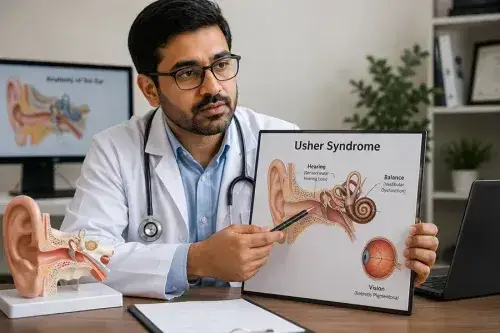
Usher syndrome is a rare inherited disorder that leads to progressive hearing and vision loss and occasionally balance difficulties. It results from genetic mutations that impair the development of sensory cells during foetal growth.
Hearing loss can vary in severity, from mild to profound. The associated vision condition, retinitis pigmentosa, gradually damages the retina, causing worsening night vision and peripheral vision loss over time.
Causes of Usher Syndrome
Changes (variants or mutations) in particular genes are the cause of Usher syndrome. Scientists have identified more than a dozen genes associated with Usher syndrome, with ongoing research continuing to uncover additional genetic contributors. They are:
- Type 1: USH1C, SANS (USH1G), MYO7A (USH1B), and PCDH15 (USH1F)
- Type 2: WHRN (DFNB31), ADGRV1 (earlier called GPR98 and VLGR1)
- Type 3: USH3A (CLRN1)
The mutations disrupt normal cell function, leading to progressive hearing loss, vision impairment due to retinitis pigmentosa, and also balance issues.
What are the three types of Usher syndrome?
Three primary types of Usher syndrome have been discussed in detail below:
- Type 1: Children who have type 1 Usher syndrome have considerable hearing loss and balance problems that cause trouble when walking or sitting. Vision problems also begin early, often before age 10, with night blindness being the first noticeable symptom. These combined challenges impact their sensory development and daily functioning from a very young age.
- Type 2: Children with type 2 Usher syndrome are born with a moderate to severe hearing problem but a normal balance. The severity of hearing loss in children with this type of Usher syndrome varies, but most can communicate well orally and benefit from using hearing aids. Retinitis pigmentosa is diagnosed during late adolescence in people with Usher type 2 syndrome.
- Type 3: This is a rare, progressive genetic disorder characterised by later-onset hearing and vision loss, along with variable balance issues. Unlike types 1 and 2, symptoms typically appear during adolescence or adulthood. Hearing loss worsens over time, and vision problems like retinitis pigmentosa gradually develop, often leading to night blindness and reduced peripheral vision. Balance may be mildly affected.
Diagnosis of Usher Syndrome
All newborn babies are routinely screened for hearing problems. Vision screening at birth is limited and does not detect progressive retinal conditions like retinitis pigmentosa. If a newborn has a diagnosis of a hearing problem, then the baby gets scheduled for follow-up testing. Nonetheless, there are also other ways to diagnose this syndrome that have been discussed in detail below:
- Electronystagmography (ENG)– An ENG test for eye movements that helps diagnose balance problems.
- Vision Testing– Ophthalmologists evaluate visual acuity and peripheral vision (using visual field tests) and examine the retina for signs of retinitis pigmentosa (RP).
- Retinal Imaging – Tests like optical coherence tomography (OCT) and fundus autofluorescence (FAF) imaging can help assess the retina's structure and function.
- Electroretinography (ERG)– An ERG checks how the retina reacts to light. It is beneficial for diagnosing retinitis pigmentosa.
- Hearing Evaluation– Audiologists assess hearing sensitivity across different frequencies to identify the type and degree of hearing loss, which can be congenital or develop later in life.
Risk Factors of Usher Syndrome
Usher syndrome primarily results from inherited genetic mutations. The risk significantly increases when both biological parents carry the same faulty gene. In such cases, there is a 25% chance their child will inherit the condition.
Usher syndrome is almost always inherited in an autosomal recessive pattern. This means a child must inherit two copies of the mutated gene (one from each parent) to have the condition. Parents who each carry one copy of the mutated gene are typically unaffected carriers. Usher syndrome is inherited in an autosomal recessive pattern. Other inheritance patterns are not considered characteristic of Usher syndrome.
Management and Treatment of Usher Syndrome
The treatment varies according to the type of Usher syndrome that a child has been diagnosed with. Here are a few popular treatment options for Usher syndrome:
- Cochlear Implants: Healthcare providers often recommend cochlear implants for babies born with hearing problems.
- Vision Aids: Your doctor may prescribe assistive devices to help a child in managing vision issues. For instance, they can recommend eyeglasses with lenses which magnify objects or filter light.
- Hearing Aids: If a child has mild to moderate hearing loss, they may benefit from hearing aids or any other kind of hearing assistive technology.
- Early Intervention Services: Some children with Usher syndrome may benefit from early intervention services. It can aid them in managing hearing, balance and vision issues.
Usher syndrome is a complex genetic condition that deeply affects hearing, vision, and sometimes balance. While there is currently no cure, early diagnosis, supportive therapies, and assistive technologies can significantly enhance quality of life. Ongoing research and awareness are essential to provide better management options and support for individuals affected by this disorder.
Reader Information: This article is intended for general informational and educational purposes only. Usher syndrome is a complex genetic condition, and symptoms, progression, and management may vary between individuals. If you or your child have symptoms related to hearing, vision, or balance, or if Usher syndrome is suspected, please consult a qualified healthcare professional, such as an audiologist, ophthalmologist, geneticist, or other appropriate specialist, for accurate diagnosis and personalised care.
Also Read:
→ Pisiform Complex Syndrome and Its Impact on Wrist Pain
→ Wallenberg Syndrome and Its Impact on Brainstem Function
→ What is the Name of the Syndrome Associated with Portal Vein Thrombosis
→ What is Dravet Syndrome in Epilepsy


Health Insurance Coverage for pre-existing medical conditions is subject to underwriting review and may involve additional requirements, loadings, or exclusions. Please disclose your medical history in the proposal form for a personalised assessment.
This FAQ page contains information for general purpose only and has no medical or legal advice. For any personalized advice, do refer company's policy documents or consult a licensed health insurance agent. T & C apply. For further detailed information or inquiries, feel free to reach out via email at marketing.d2c@starhealth.in







