Vegetable Salad for Weight Loss - Advantages of Including them in Weight-Management PlanVegetable Salad for Weight Loss - Advantages of Including them in Weight-Management Plan
So, you have decided to try a vegetable salad for weight loss, and honestly, that is not a bad place to start. Bowls full of colour, crunch, and barely any calories, what's not to like? But before you go and toss every leaf in your fridge into a bowl and call it a diet plan, it helps to understand what a veg salad can genuinely do for your weight and what it simply cannot.
This article walks you through the nutrition angle, how a vegetable salad recipe for weight loss actually earns its place at the table, which vegetables tend to work best, a few recipe ideas you can try this week, and the small mistakes that quietly undo all the good work.
Is Vegetable Salad Good for Weight Loss?
A veg salad for weight loss is not some magic switch that melts fat away on its own. What it does is fill up a good portion of your plate with low-calorie, high-fibre, water-rich food, which naturally leaves less room for calorie-dense options. Three things make this work in your favour:
- Volume without the calorie baggage, since most vegetables are 80-95% water
- Fibre that takes its time moving through your gut, keeping hunger at bay a bit longer
- Chewing time. Raw vegetables need more effort to eat, which slows the whole meal down.
None of this replaces the basic rule of weight management; you still need to be eating fewer calories than you burn. The World Health Organisation (WHO) notes that weight management fundamentally comes down to the balance between calories eaten and calories used.
No single food, diet, drink, or exercise can directly cause weight loss. A vegetable salad for weight loss may support your efforts, but it works best alongside regular movement and an overall balanced diet, not instead of one.
How Does Veg Salad Help with Weight Loss?with Weight Loss?
Here are some ways vegetable salads may support weight management:
Fibre and Water Slow You Down, In a Good Way
Fibre-rich vegetables like cucumber, carrot, and bell pepper hold on to water and take longer to digest.NIH-funded research has found that soluble fibre in particular interacts with the gut in ways that support fullness and steadier digestion. This is part of why a weight-loss veg salad tends to keep you feeling satisfied for a stretch, rather than leaving you hunting for a snack twenty minutes later.
Low Energy Density Means You Eat More, For Less
Energy density is basically how many calories are packed into a given weight of food. Vegetables score low here. A large bowl of salad can weigh a lot and still stay under 100 calories, so you get the feeling of a substantial meal without the calorie load that usually comes with it.
It Can Quietly Replace Higher-Calorie Choices
Less about the salad itself, more about what it pushes out. A controlled study on meal timing found that eating a low-energy-dense salad before the main course increased vegetable intake without adding to overall meal calories. Starting a meal with veg salad for weight loss in mind, or swapping it in for fried snacks, often means fewer calories eaten across the day.
What is the Best Veg Salad for Weight Loss?s the Best Veg Salad for Weight Loss?
There isn't one single winning combination. That said, some vegetables do more heavy lifting than others when the goal is weight management.
| Vegetable | Fibre (per 100 g) | Best Paired With |
| Cucumber | ~0.5g | Mint, lemon, light vinaigrette |
| Carrot | ~2.8g | Roasted chickpeas, cumin |
| Bell pepper | ~2.1g | Olive oil, black pepper |
| Broccoli (blanched) | ~2.6g | Garlic, lemon juice |
| Spinach | ~2.2g | Tomato, boiled egg |
| Beetroot | ~2.8g | Feta or paneer, walnuts |
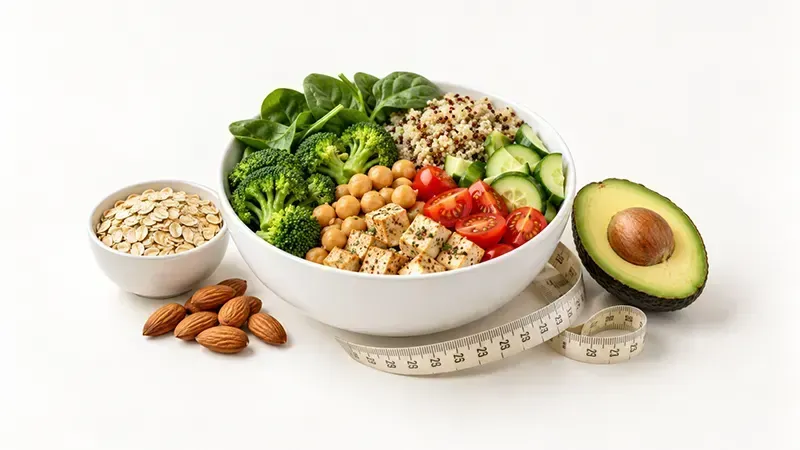
The best vegetable salad for weight loss usually mixes a fibrous base like spinach or lettuce, a couple of crunchy vegetables, and a small protein add-on such as boiled egg, paneer, or roasted chana. The protein part may help increase feelings of fullness compared with vegetables alone, although individual responses can vary. Think of this as your best veg salad for weight loss: starting formula, base, plus crunch, plus protein.
So, Does Vegetable Salad Really Help with Weight Loss?with Weight Loss?
In a real but modest way, yes. A vegetable salad for weight loss works by filling you up on very few calories, adding fibre that supports satiety, and often taking the place of something less useful on your plate. It is not a shortcut, and it will not undo the effect of a diet that is otherwise heavy on fried or sugary food. The NHS recommends at least five portions of fruit and vegetables a day as part of a balanced diet, and a salad is an easy way to tick off a few of those in one go. What it can do is make a calorie-controlled routine a little easier and a lot more enjoyable to stick with.
If you are managing a condition such as diabetes, kidney disease, or digestive issues, it is worth checking with a doctor or dietitian about which vegetables and portions suit you best.
Reader Information: This article is for informational purposes only and should not be considered medical or nutritional advice. A vegetable salad may support weight-management efforts as part of a balanced diet, regular physical activity, and a healthy lifestyle. No single food, diet, drink, or exercise can directly cause weight loss. Weight-loss outcomes vary between individuals based on factors such as overall dietary habits, health conditions, activity levels, sleep, and metabolism. Individuals with medical conditions, including diabetes, kidney disease, or digestive disorders, should consult a qualified healthcare professional or registered dietitian before making significant dietary changes.