





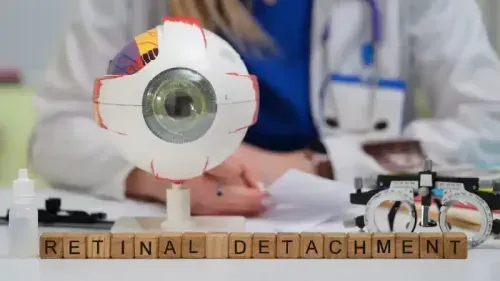
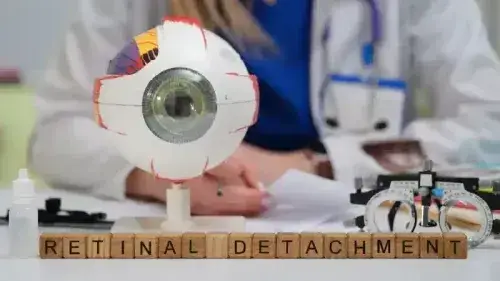
Is Retinal Detachment Surgery Serious?
Retinal Detachment Treatment Guide: Surgery, Risks
Retinal detachment is a serious eye condition that requires immediate medical attention to prevent permanent vision loss. When the retina separates from the underlying tissue, it can no longer function properly, leading to rapid and permanent vision loss if left untreated.
In this blog, we address a commonly asked question: Is retinal detachment surgery serious? We’ll explore the urgency of surgical intervention, available treatment options, and whether the retina can heal naturally.
Why is Retinal Detachment a Medical Emergency?
Retinal detachment interrupts the normal functioning of the retina in processing visual data by cutting off its supply of oxygen and nutrients. The longer the detachment, the greater the number of photoreceptor cells that are permanently destroyed.
Macula-on rhegmatogenous retinal detachment is considered an ocular emergency, and prompt surgical repair often within 24 to 72 hours is recommended to prevent macular involvement, depending on clinical circumstances. Macula-off detachments are also urgent but may have a window of several days, depending on severity.
There are three principal types of retinal detachment:
- Rhegmatogenous (most common): Secondary to a retinal defect or tear
- Tractional: Secondary to traction of the retina by scar tissue (such as in diabetic retinopathy)
- Exudative: Secondary to leakage of fluid under the retina without a tear
All have different surgical interventions and related postoperative complications.
What are the Types of Surgeries for Retinal Detachment?
Several surgeries are applied, varying with the size, location, and nature of detachment:
- Scleral Buckling: A band of silicone is stitched onto the outer white (sclera) of the eye to buckle in the eye wall, reducing tension on the retina.
- Vitrectomy: The gel-like vitreous is carefully removed, and the space is filled with a bubble of gas, silicone oil, or saline to flatten the retina back into place. This approach is typically chosen for treating complex cases or when the detachment involves the back (posterior) portion of the retina.
- Pneumatic Retinopexy: A bubble of gas is injected into the eye, and the patient must lie in specific head positions to flatten the retina back again. Less intrusive but only effective in some situations.
Each procedure carries potential postoperative risks, which may include infection, cataract progression, increased intraocular pressure, and retinal re-detachment. However, many patients recover without significant complications. Visual results after surgery are based on the severity of injury before treatment, particularly whether the macula was detached or not.
How Successful Is Retinal Detachment Surgery?
The surgical success rate is excellent; 85% to 90% of the primary procedures restore the retina with success. If the first surgery is unsuccessful, repeat procedures can still achieve anatomic reattachment, although visual recovery may be less favourable. The visual outcome, however, is inconsistent and may not restore vision to pre-detachment levels, especially if the macula (central retina) was affected.
Visual results are determined by the following:
- Time since detachment
- Type of detachment
- Existing retinal problems
- Age and general condition of the eye
All patients require follow-up care after surgery, while vision rehabilitation may be beneficial for those with persistent visual impairment.
Can the Retina Be Repaired Naturally?
No, a detached retina will not heal or reattach on its own. The situation has to be treated immediately surgically. In contrast to minor cuts or inflammation elsewhere in the body, the retina lacks regenerative and vascular support to heal itself.
However, small holes or tears in the retina that increase the likelihood of detachment can occasionally be managed by laser photocoagulation or cryopexy (freezing) to prevent detachment. They are not "cures" of the retina in the sense of a natural process but are low-tissue-burden preventive treatments.
It should also be remembered that natural remedies, exercises for the eyes, or dietary supplements cannot stabilise or realign a detached retina. Delayed surgical treatment can result in permanent vision loss.
What are the early symptoms of retinal detachment?
Recognising warning signs is crucial. Symptoms typically appear suddenly and may include:
- Flashes of light (in photopsia) in the peripheral field of vision
- Sudden appearance of floaters
- Shadow, or curtain. Moving. In the field of vision
- Blur or sudden loss of peripheral vision
Symptoms require urgent ophthalmologic assessment. Early detection leads to improved surgical outcomes.
Who is at Risk for Retinal Detachment?
Risk factors include:
- Severe myopia (near-sightedness): The thin retina in high myopes is more prone to tear.
- Eye trauma
- Family history
- Previous eye surgeries, especially cataract removal
- Proliferative diabetic retinopathy
- Lattice degeneration: A thinning of the peripheral retina
Patients with these risks should schedule regular dilated eye exams to monitor for early retinal changes.
Is Recovery from Retinal Detachment Surgery Difficult?
Recovery from surgery depends on the procedure:
- Positioning : Following vitrectomy or pneumatic retinopexy, patients may be required to maintain a strict face-down position for several days or weeks to allow the retina to settle into place.
- Vision changes : Vision is usually blurred at first and resolves over weeks to months.
- Activity restrictions : Patients are asked to refrain from flying (if an air bubble was inserted), heavy lifting, and abrupt head movement.
- Medication : Eye drops to prevent infection and inflammation.
Most patients resume daily activities within several weeks, though complete visual recovery may take months and varies case by case. Follow-up is required to detect complications such as epiretinal membrane formation, macular pucker, or re-detachment.
Can Retinal Detachment Happen Again After Surgery?
Yes, it can recur, especially in more difficult detachments or if the underlying aetiology (such as diabetic retinopathy or lattice degeneration) still exists. Reported rates of recurrent retinal detachment vary widely (approximately 5–30%), depending on factors such as case complexity, presence of proliferative vitreoretinopathy, and underlying retinal disease.
Recurrent detachment is more challenging to manage and usually necessitates re-vitrectomy, sometimes with silicone oil tamponade. Close postoperative surveillance and maintenance of follow-up appointments are essential in identifying early complications.
Can You Prevent Retinal Detachment?
Although specific aetiologies can be prevented, in some cases, prevention in advance may decrease risks:
- Ongoing dilated eye checks, particularly if high risk
- Treatment of new floaters, flashes, or shadows in the vision early
- Protective eyewear for sports or dangerous labour
- Strict control of high blood pressure and diabetes
- Routine follow-up if lattice degeneration or retinal tears are discovered
Preventive laser or cryotherapy can be performed for high-risk retinal tears to prevent further progression to detachment.
Are There Long-Term Effects After Surgery?
Even following an uneventful operation, patients are sometimes left with:
- Decreased contrast sensitivity
- Distorted (metamorphopsia) or wavy vision
- Night blindness
- Cataract development, particularly after vitrectomy
- Macular oedema or scarring
While these effects are debilitating, prompt therapy and visual rehabilitation therapy permit many patients to regain function. Patients, in most cases, return to normal work, driving, and reading in a few months.
Can Retinal Detachment Lead to Total Blindness?
Yes, if not treated, retinal detachment will result in total, irreversible blindness of the eye involved. The longer the detachment remains in place, particularly when it involves the macula, the more severe the damage. With prompt surgery, this result can be avoided, so public awareness and timely diagnosis are important.
Conclusion
Surgery for retinal detachment is a severe but very successful operation for preserving sight. It must not be delayed, and no home treatment for retinal detachment is available. With no delay in diagnosis, the best surgical technique, and follow-up care, most patients achieve reattachment of the retina along with visual stabilisation.
Reader Information: This article is intended for general informational and educational purposes only. Retinal conditions vary widely in severity, cause, and required management. Treatment decisions, surgical timing, outcomes, and recovery depend on individual patient factors and should be made only after consultation with a qualified ophthalmologist or retina specialist.
Also Read:
→ What is Exactly Done in Bypass Surgery
→ What is the Average Cost of Knee Replacement Surgery
→ Difference Between Reconstructive and Cosmetic Surgery
Related Health Insurance Links


Health Insurance Coverage for pre-existing medical conditions is subject to underwriting review and may involve additional requirements, loadings, or exclusions. Please disclose your medical history in the proposal form for a personalised assessment.
This FAQ page contains information for general purpose only and has no medical or legal advice. For any personalized advice, do refer company's policy documents or consult a licensed health insurance agent. T & C apply. For further detailed information or inquiries, feel free to reach out via email at marketing.d2c@starhealth.in







