





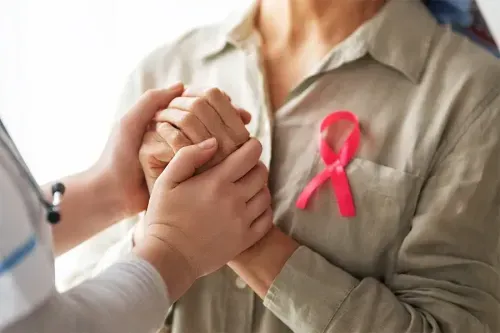
What are the Symptoms of Stage 3 Breast Cancer?
Stage 3 Breast Cancer Guide – Symptoms & Treatment Insights
Breast cancer in stage 3 is regarded as progressing when it has spread to adjacent tissues or lymph nodes but not to other organs. At this point, the symptoms are more noticeable and can have a big influence on day-to-day activities. Being aware of these symptoms can assist people in seeking prompt medical attention.
Common Symptoms of Stage 3 Breast Cancer
Following are the common symptoms related to stage 3 breast cancer:
Symptom 1: A Noticeable Lump or Thickening in the Breast
One of the key symptoms is a persistent breast lump. In contrast to smaller or less distinct lumps in previous stages, the stage 3 lump could:
- Be bigger
- Feel rigid or anchored to the tissue around you
- Expand over time
It could or might not hurt. However, examining any new or changing lump is important, even if prior mammograms were normal.
Symptom 2: Changes in Breast Size or Shape
When breast cancer reaches stage 3, one breast may seem noticeably different from the other. You can observe the following:
- One breast augmentation or swelling
- Unusual shrinkage or flattening
- Asymmetry or uneven breast shape
Although these alterations may occur gradually, they usually become more apparent as the disease spreads.
Symptom 3: Skin Changes Over the Breast
The skin that covers the breast is frequently affected by advanced breast cancer. These modifications might consist of:
- Inflammation or redness
- Skin that is puckered, thick, or dimpled (like an orange peel)
- A coarse, scaly appearance
These signs may point to the dissemination of cancer cells to the skin or the existence of inflammatory breast cancer.
Symptom 4: Nipple Abnormalities
There may also be noticeable alterations in the nipple region. These may consist of:
- Inversion (drawing the nipple inward)
- Skin that is scaling, flaking, or crusting
- Unusual discharge, particularly if it is transparent or red
These symptoms, particularly if they continue over time, should not be mistaken for mild illnesses or irritations.
Symptom 5: Swelling in the Armpit or Near the Collarbone
Nearby lymph nodes are typically affected by stage 3 breast cancer. A swelling lump beneath the arm (axillary lymph nodes) may result from this.
- A noticeable bulge above or below the collarbone or puffiness
- Aching or tenderness in certain places
Lymph node swelling frequently signifies that the cancer has started to spread locally and has to be treated right away.
Additional and Systemic Symptoms
The body may start to exhibit symptoms of strain or systemic involvement when the disease progresses to stage 3. Despite not being exclusive to the breast, the following symptoms are linked to the development of the disease:
1. Persistent Pain in the Breast or Chest Area
Breast cancer does not always hurt, but by stage 3, it becomes increasingly prevalent. You may feel like:
- A throbbing or dull aching in your breast
- Pains that are sharp and stabbing
- Persistent pain in one area of your breast
In certain situations, this discomfort may radiate to the back or even the chest wall.
2. Fatigue and General Weakness
As your body copes with the increasing tumour load and immunological response, fatigue becomes increasingly apparent. It may lead to:
- Extreme fatigue that does not go away with rest
- Reduced physical endurance
- Having trouble focusing or feeling disoriented
This type of exhaustion is distinct from ordinary fatigue and tends to last even in the absence of physical activity.
3. Noticeable Weight Loss or Appetite Changes
Some people with stage 3 breast cancer may start to experience the following symptoms, though these are more prevalent in metastatic stages:
- Unaccounted-for weight loss
- Reduced appetite or rapid feelings of fullness
- Alterations in metabolism brought on by the illness
These symptoms may indicate how the cancer is starting to impact the general working of the body.
Stages of Stage 3 Breast Cancer
Different stages of stage 3 breast cancer vary depending on tumour size and whether cancer cells extend to the breast's surrounding tissues and lymph nodes.
1. Stage 3A:
Stage 3A breast cancer is the earliest classification. In this stage, invasive cancer spreads into nearby lymph nodes from breast tissues. Characterised by the following:
- Any size of tumour cells or cancer cells found in around 4 to 9 lymph nodes in the armpit or spread of lymph nodes to the nearby breastbone.
- Stage IIIA breast cancer involves either a tumour >5 cm with spread to 1–3 axillary lymph nodes, or cancer spread to 4–9 axillary lymph nodes or internal mammary lymph nodes, regardless of tumour size.
- The primary tumour size is usually bigger than 5 cm.
2. Stage 3B:
In this 3B stage, invasive cancer extends beyond lymph nodes and breast tissues to chest walls and the skin of the breast. Follow the ways of characterisation below:
- Cancer extended to the chest wall.
- This cancer cell may spread into 9 lymph nodes near the breastbone or armpit.
- In Stage IIIB, a primary breast tumour is usually present and has extended to the chest wall and/or skin of the breast.
- Often, there are ulcers and swelling in the breast area.
3. Stage 3C:
In this stage, cancer cells also extend into chest walls from lymph nodes and breast tissues where the cancer was initiated. Characteristics of this cancer are:
- Stage IIIC breast cancer involves extensive regional lymph node spread but does not include distant organs or bones.
- Cancer can spread to more than 10 lymph nodes.
It can extend to below or above the collarbone lymph nodes and breastbone or underarm.
Potential Treatments for Stage 3 Breast Cancer
Treatment options for stage 3 breast cancer vary widely and consist of oral medication, surgery and therapies. Here is a list of treatment options.
- Targeted therapies are prescribed based on tumour biology (HER2-positive or hormone receptor–positive status) and are not used in all Stage 3 breast cancers.
- Hormonal therapy with estrogen receptor modulators Tamoxifen and Anastrozole, which is an aromatase inhibitor. These oral medicines prevent the growth of the positive hormone receptor tumours as they affect cancer cells or hormones.
- Chemotherapy targets cancer cells and destroys cell growth.
- Radiotherapy destroys cancerous cells with high-energy particles or rays. Brachytherapy and external beam radiation therapy are the most applied 2 radiation therapies.
- Performing surgery helps to directly remove the cancer and surrounding parts of the breast or entire breast or lymph nodes. Breast-conserving surgery, mastectomy and lymph node dissection are cancer removal surgery options.
There are 3 sub-stages of stage 3 breast cancer. In stage 3 breast cancer, cancer cells spread into the chest wall, such as bones, muscles and fat from breast tissue. Surgery removes cancer cells or lymph nodes to prevent further growth of tumour cells in the body. Besides, chemotherapy, immunotherapy and radiotherapy are the best treatment options for stage 3 breast cancer.
Compared to earlier stages, stage 3 breast cancer exhibits more severe and obvious symptoms, which frequently affect the breasts and the surrounding regions' look and functionality. Early identification of these symptoms, particularly when they coexist, can significantly impact results.
For appropriate screening, imaging, and diagnosis, anybody observing these warning indicators should speak with a healthcare professional. Effective management of stage 3 breast cancer requires prompt and vigorous therapy.
If you experience any symptoms described in this article or have concerns about breast health, please consult a medical professional promptly. In case of a medical emergency, seek immediate medical attention.
Also Read:
→ What Does Early Stage Skin Cancer Look Like
→ What Does Early-Stage Tongue Cancer Look Like
→ What Does Stage 3 Cancer Generally Mean
→ What Does Stage 4 Cancer Generally Mean
Popular Topics
People Also Search For


Health Insurance Coverage for pre-existing medical conditions is subject to underwriting review and may involve additional requirements, loadings, or exclusions. Please disclose your medical history in the proposal form for a personalised assessment.
This FAQ page contains information for general purpose only and has no medical or legal advice. For any personalized advice, do refer company's policy documents or consult a licensed health insurance agent. T & C apply. For further detailed information or inquiries, feel free to reach out via email at marketing.d2c@starhealth.in







