





What are the Symptoms of Vasculitis in the Legs?
How Vasculitis Affects the Legs - Skin Lesions, Gangrene & More
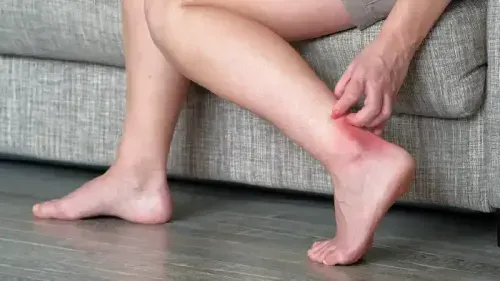
Vasculitis in the legs can manifest with various symptoms, including skin lesions like palpable purpura, petechiae, ulcers, hives, and nodules. Nerve problems, like numbness, pain, tingling, and weakness in the legs, can occur. Furthermore, ulcers, leg pain, and gangrene (tissue death) can occur due to reduced blood flow.
Symptoms of Vasculitis in the Legs
These are some of the symptoms of vasculitis in the legs:
Skin Lesions
Here are a few types of skin lesions that occur due to vasculitis in the legs.
- Palpable purpura: Reddish-purple spots occur that you can feel underneath the skin. It occurs due to bleeding under the skin due to inflammation and damage to small blood vessels. It is a key indicator of leukocytoclastic vasculitis and inflammation of small blood vessels. Antigen-antibody deposition in small blood vessels causes blood leakage into the surrounding tissues.
- Petechiae: These are tiny pinpoint spots that are red, purple, or brown, present on the legs. They are not bumpy and do not go away when compressed. In vasculitis, petechiae result from immune-mediated inflammation and damage to small blood vessels, leading to leakage of blood into the skin.
- Hives (urticaria): Hives appear in the legs as red, itchy, raised bumps or welts on the skin. Inflammation of blood vessels causes raised, discoloured, and red bumps on the skin. Urticarial vasculitis can also affect other body parts, including the heart, kidneys, joints, eyes and lungs. These cause burning or itchy sensations, rather than normal hives.
- Nodules: Nodules refer to inflamed, palpable lumps or bumps that can appear on your skin, mainly on the legs. These nodules are a common manifestation of vasculitis, causing inflammation in small or medium-sized blood vessels. Lobular vasculitis, known as erythema induratum, causes inflammation of the fatty tissue under the skin.
Nerve Problems
Vasculitis can also exhibit symptoms regarding neural problems, which are as follows:
- Numbness and Tingling: Vasculitis reduces blood flow and causes nerves to become inflamed and narrowed. It restricts blood flow to the nerves, leading to sensory dysfunction. If nerves do not receive enough blood and oxygen, they can be damaged, leading to numbness, tingling, and pain.
- Gangrene: Severe or untreated vasculitis involving medium or large arteries may rarely lead to critical ischemia and gangrene due to prolonged reduction in blood supply, leading to tissue death. When there is a limitation to blood flow, tissues die due to deprivation of oxygen and nutrients.
- Pain: Inflammation thickens the wall of blood capillaries, narrowing them and restricting blood and oxygen supply to tissues. Lack of oxygen and nutrients can cause pain, especially in the legs and other body parts.
- Weakness: It damages the muscles and nerves present at the extremities, leading to weakness in the legs. Vasculitic neuropathy affects the blood vessels that supply blood to the nerves. It causes nerve damage, leading to symptoms such as pain, weakness, or numbness in the leg muscles.
- Systemic Symptoms: These symptoms of vasculitis may include fever, fatigue, weight loss, muscle aches, and organ-specific complications depending on the size and location of affected blood vessels. Primarily, it affects the blood flow to those areas, particularly in the legs and feet, causing tissue damage and nerve problems.
If vasculitis affects small blood vessels, it can cause symptoms like skin rashes, bruising, and ulcers on the legs.
Other conditions, like varicose veins or peripheral vascular disease, can make the legs more susceptible to vasculitis.
Disclaimer: This article is intended for general informational and educational purposes only and should not be considered a substitute for professional medical advice, diagnosis, or treatment. Seek evaluation and guidance from a qualified healthcare professional for any symptoms, concerns, or decisions related to Vasculitis.
Also Read:
→ Symptoms of Viral Endocarditis
→ Symptoms of Viral Meningitis
→ Symptoms of Weak Bladder Muscles
→ Labor Pain Symptoms And Relief - What to Expect Before Delivery
Related Health Insurance Links



Health Insurance Coverage for pre-existing medical conditions is subject to underwriting review and may involve additional requirements, loadings, or exclusions. Please disclose your medical history in the proposal form for a personalised assessment.
This FAQ page contains information for general purpose only and has no medical or legal advice. For any personalized advice, do refer company's policy documents or consult a licensed health insurance agent. T & C apply. For further detailed information or inquiries, feel free to reach out via email at marketing.d2c@starhealth.in







