





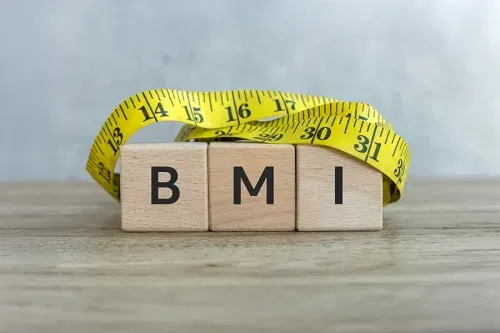
Why BMI is Inaccurate and Misleading?
Why You Shouldn’t Rely on BMI alone?
It is completely normal for your body to story energy as fat. But too much fat or too less body fat can trigger the risk of your illness, depending on where your body stores it. Although Body Mass Index (BMI) is an easy and common method to check if a person’s weight is in a healthy range as per their height, it does not always give a true picture of a person’s health. BMI is calculated by dividing a person’s weight in kilograms by the square of their height in metres. The result places people in groups such as underweight, normal, overweight, or obese. BMI is useful indicator of health at the population level. However, distribution of fat on your body is more significant than the amount while assessing risk of disease. Due to this reason, your waist circumference is considered as a better predictor of health risk than your BMI.
Also read BMI Formula Explained
The reasons why BMI is not always an accurate health indicator are as follows:
BMI isn’t always the best measure of Your Health
At population based, BMI is generally utilized for indicating risk level for morbidity (disease risk) and mortality (death rates).
Differences in BMI between individual adults of the same age and sex are usually due to body fat, however there are many exceptions to this rule, which is why a BMI figure may not always be accurate.
BMI calculations will misrepresent the body fat amount for:
- body builders
- some high-performer athletes
- pregnant women
BMI calculations will miscalculate the body fat amount for:
- Aged People
- people with a physical disability, who are unable to walk and may have muscle wasting.
BMI is also not an accurate indicator for people with:
- Dealing with eating disorders like anorexia nervosa
- High level obesity.
Why isn’t BMI always the best measure of health?
In general, the more body fat you’re carrying, the higher your health risk. However, BMI cannot differentiate between body fat and muscle mass.
This reflects associated exceptions with the BMI guidelines:
- Muscles – Body builders and people who have a lot of muscle bulk will have a high BMI, but are not overweight.
- Height – BMI is not completely independent of height and it tends to misrepresent obesity among people with shorter height and underrate it among people with taller height. Therefore, BMI should not be utilized as an indicator especially for adults with short height (lower than 150 cm) or long height (higher than 190 cm).
- Physical disabilities – People having physical disability and are not able to walk may have muscle wasting. Their BMI can be slightly decrease, but this does not necessarily reflect they are underweight. In this condition, it is important to take advice from nutritionist for helpful health suggestion.
- People of different ethnic groups – People of different ethnic groups influence BMI by having varied body composition, metabolic responses and overall fat distribution. It means the same BMI can reflect different health risks for different groups of people. However, some populations have equivalent risks at a higher BMI, such as people of Torres Strait Islander and Maori origin.
1. BMI Does Not Tell Muscle from Fat
BMI cannot show how much of a person’s body is muscle and how much is fat. Muscle weighs more than fat. Due to this, people with strong and muscular bodies may have a high BMI even if they have very little fat.
For example, professional athletes often fall in the overweight or obese category based on BMI, though they are actually very fit. So, BMI can be misleading for people with high muscle mass.
2. It Does Not Show Where Fat Is Stored
Storing fat around the stomach increases the likelihood of health problems like heart disease and diabetes. This type of fat is called visceral fat. BMI only shows total body weight without telling where the fat is located.
Two people can have the same BMI but carry fat in different parts of the body. One may have more stomach fat and face higher health risks, while the other may not. This makes BMI a poor tool for judging fat distribution.
3. BMI Treats Everyone the Same Regardless of Age or Sex
Men and women naturally have different body compositions. Women tend to have more body fat than men, even if their BMI is the same. Older people often lose muscle and gain fat over time, yet BMI may not reflect these changes. By using one standard for everyone, BMI does not tell important differences in age and sex that affect health.
4. It Does Not Fit All Ethnic Groups
BMI cut-off points do not work equally for every race or ethnic group. Individuals from different backgrounds can experience health issues such as diabetes at lower BMI levels. In fact, some people may maintain better health at higher BMI levels than what the scale indicates.
This is so because BMI does not adjust for these differences; it may wrongly label people as healthy or unhealthy based on their background.
5. BMI Ignores Other Health Factors
BMI only measures weight in relation to height. It does not check other signs of health, such as blood pressure, cholesterol, or sugar levels. A person may have a normal BMI and still be at risk of serious health problems. Another person may have a high BMI but show no signs of poor health. This shows that BMI does not give a complete view of someone’s health.
6. It Can Affect Mental Well-Being
When doctors or others rely too much on BMI, people may feel judged based on a number. Being told you are overweight or obese can lead to stress, sadness, or low self-worth. This can affect a person’s mental health and even stop them from seeking help or making healthy choices. In such cases, BMI does more harm than good.
Also read BMI Calculator for Women
Other Ways to Measure Health
Because of these flaws, many health experts suggest looking at more than just BMI. Better ways to check health include:
● Waist size and waist-to-hip ratio: These show how much fat is stored around the stomach, which helps understand the risk for heart disease and diabetes.
● Body fat percentage: Tools such as DEXA scans or skinfold tests can give a clearer picture of how much fat is on the body.
● Full health check-ups: Things like blood tests, physical activity levels, and diet are important to judge overall health.
BMI can be useful as a starting point, but it is not reliable to judge someone’s complete health. It fails to consider muscle, fat placement, age, sex, race, and other key health signs. Using BMI alone may lead to wrong ideas about someone’s well-being.
Also read BMI Calculator for Men
A better approach to assess health status more comprehensively may include different tests like Body Composition Analysis, Blood Pressure Monitoring, Waist Circumference & Waist-to-Hip Ratio, etc. This way, health care becomes fairer and accurate for everyone.
Also Read:
→ Are There Better Alternatives to BMI for Health Assessment
→ Can a High BMI Indicate Hidden Health Risks
→ Can a High BMI Lead to Rejection of Health Insurance Claims
GET STARTED
Confused? We’ve got the answers
We're Star Health. We offer the coverage that's designed to help keep you healthy. It's the care that comes to you and stays with you.
BMI is not always an accurate health indicator because it only measures height and weight, failing to distinguish between fat mass and muscle mass or identify fat distribution. It neglects crucial factors like age, gender, ethnicity, and metabolism, often misclassifying muscular individuals as overweight and overlooking internal health risks.
Body Mass Index (BMI) is widely used as a screening tool, but it is considered an unreliable measure of individual health because it only compares total weight to height, failing to account for body composition, fat distribution, and other biological factors.
BMI fails to differentiate between fat and muscle because it only calculates total weight (including bone, muscle, and fat) divided by height squared, ignoring body composition. As muscle is denser than fat, muscular individuals (like athletes) often receive a high BMI, falsely classifying them as overweight or obese.
BMI is not a fully accurate measure of overall fitness, as it only calculates weight relative to height, failing to distinguish between muscle mass and fat mass. While useful as a general, low-cost screening tool for population-level health, it is limited for individual assessment because it ignores fat distribution, age, sex, or metabolic health.
Popular Topics
People Also Search For


Health Insurance Coverage for pre-existing medical conditions is subject to underwriting review and may involve additional requirements, loadings, or exclusions. Please disclose your medical history in the proposal form for a personalised assessment.
This FAQ page contains information for general purpose only and has no medical or legal advice. For any personalized advice, do refer company's policy documents or consult a licensed health insurance agent. T & C apply. For further detailed information or inquiries, feel free to reach out via email at marketing.d2c@starhealth.in







