

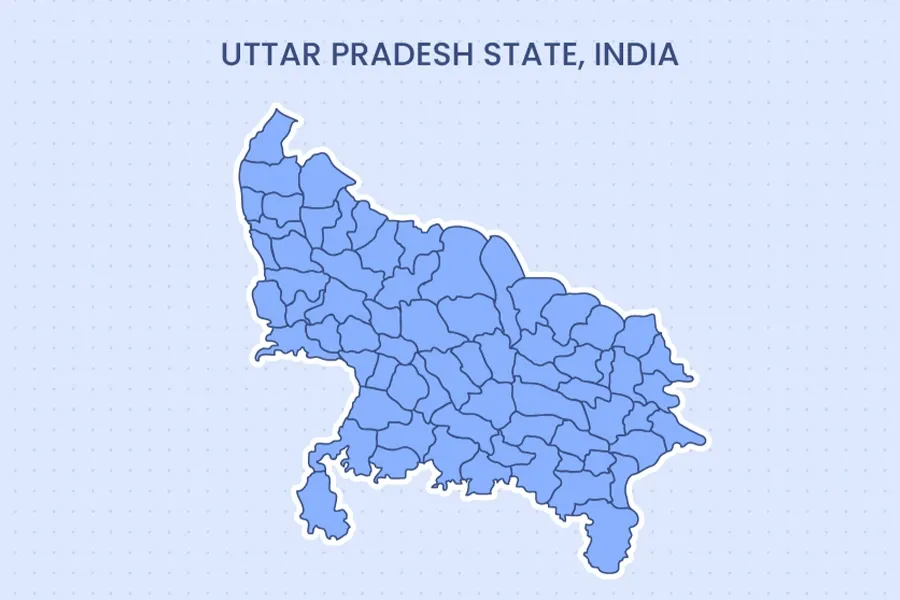
Ayushman Bharat Uttar Pradesh Health Insurance Scheme
How To Apply for Ayushman Bharat in Uttar Pradesh?
The Ayushman Bharat Pradhan Mantri Jan Arogya Yojana (AB-PMJAY) in Uttar Pradesh provides cashless health insurance coverage of up to ₹5 lakh per family per year for secondary and tertiary care hospitalisation to eligible beneficiaries. This government-sponsored scheme covers all pre-existing conditions, has no family size or family restrictions and includes pre- or post-hospitalisation costs.
What is PMJAY (Ayushman Bharat Yojana) in Uttar Pradesh?
The Ayushman Bharat Yojana (Uttar Pradesh), a flagship health insurance scheme initiative from the Government of India, provides comprehensive coverage for tertiary and secondary hospitalisation expenses. This government-sponsored program is crafted to benefit impoverished and vulnerable families in India, including those in Uttar Pradesh. The Ayushman Bharat Yojana, a national health protection scheme, is now known as Pradhan Mantri Jan Arogya Yojana. This scheme plans to make secondary and tertiary healthcare completely cashless for the vulnerable section of society.
Key Features of Ayushman Bharat:
- PM-JAY provides cover of Rs. 5 lakhs per family per financial year, for secondary and tertiary care hospitalisation in public and private network hospitals across India.
- PM-JAY provides cashless access to health care services for beneficiaries in hospitals.
- PM-JAY will help reduce high expenditure for hospitalisations, which push 6 crore people into poverty each year, and will help mitigate the financial risk arising from catastrophic health services.
- No restrictions on family size, age or gender.
- All pre–existing conditions are covered from day one.
- The benefits of the scheme are portable across the country, i.e. a beneficiary can visit any network public or private hospital for cashless treatment.
- Public hospitals are reimbursed for the healthcare services equivalent to those of private hospitals.
How to Apply for the Ayushman Card in UP?
- Online: Visit the official website (setu.pmjay.gov.in), or you can apply through the Ayushman App.
- Common Service Centres (CSC): Visit a nearby CSC with an Aadhar card and a ration card.
- Help Desk: Contact the Ayushman Mitra at any officially partnered public or private hospital for help with registration.
Note: For detailed information, beneficiaries can use the toll-free number 14555 or visit their local community health centre.
Eligibility Criteria for Ayushman Bharat (In Uttar Pradesh)
- Families included in the Socio-Economic and Caste Census 2011 data (whether rural or urban)
- Families previously covered under Rashtriya Swasthya Bima Yojana
- Domestic Workers, street vendors, sanitation workers, labourers, drivers, etc., are specific occupational categories.
Benefits of Ayushman Bharat Yojana (Uttar Pradesh)
The Pradhan Mantri Jan Arogya Yojana (PMJAY) provides crucial healthcare access to around 40% of the population of India, including the most vulnerable segments of society. Key advantages of this scheme include:
- Comprehensive Coverage: Includes 27 specialised health service areas, encompassing oncology, cardiology and orthopaedics.
- Post-Discharge Care: Ensures health coverage for post-discharge care and the doctor’s prescribed medication expenses.
- Multi-surgical Coverage: Provides financial support for multiple surgeries, with subsequent procedures covered at lower rates.
- Critical Illness Coverage: Extends financial support for critical illness treatment, including cancer, heart problems, organ transplantation and other life-threatening conditions.
- No Restrictions: All family members will be covered irrespective of their size, age or gender.
- Pre-Existing Conditions: All pre-existing medical conditions are covered from the first day of the policy.
- Senior Citizen Coverage: As of September 2024, all citizens aged 70 and above are eligible for up to ₹5 lakh in coverage, regardless of income.
What is Covered Under Ayushman Bharat Yojana Scheme or PMJAY?
To provide accessible healthcare to the economically underprivileged, the Ayushman Bharat Yojana Scheme in India, including Uttar Pradesh, offers comprehensive coverage of up to Rs. 5 lakh per family every year for secondary and tertiary healthcare expenses. Health insurance provided under this government-sponsored scheme includes various components such as diagnostic tests, consultation charges, treatment, pre-hospitalisation services, intensive and non-intensive care, medication, medical consumables, accommodation, organ transplants where necessary, and post-hospitalisation expenses for a duration of up to 15 days.
What is Excluded Under the Ayushman Bharat Yojana Scheme?
Ayushman Bharat health insurance has its exclusions, just like other health insurance. The following components are not covered under the scheme:
- Out-Patient Department (OPD) expenses
- Drug rehabilitation
- Cosmetic Surgeries
- Fertility treatments
- Individual Diagnostics
- Organ Implants
What are Standard Health Insurance Policy vs. Government Insurance Scheme?
Selecting between a standard private health insurance plan and a government-affiliated scheme depends mainly on your financial situation and personalised healthcare coverage requirements. While private health plans offer high sum insured and extensive customisation, Government-sponsored health insurance schemes are tailored to provide a critical safety net for the underprivileged population. Additionally, private health insurance works as a comprehensive tool for wise financial investment, offering perks like annual health screenings and tax deduction benefits. On the other hand, government initiatives focus on providing essential healthcare with no premium expenses for beneficiaries.
| Parameter | Standard Private Health Insurance | Government Health Insurance Scheme |
| Eligibility | Anyone can purchase | Primarily for the underprivileged section or the specific groups |
| Sum Insured Amount | Higher flexibility | Generally limited or capped (up to 5 lakhs) |
| Premium Cost | Depends on policy type, age, pre-existing diseases, etc. | Mostly fully subsidised |
| Network of Hospitals | Extensive private hospital tie-ups across India | A mix of public and private partner hospitals |
| Tax Benefits | Deduction benefits under Section 80D are available | Not applicable |
| Room Rent | Private rooms often available, subject to policy | Generally limited to general wards |
| No Claim Bonus | Cumulative bonus awarded for every claim-free year during policy tenure | Not applicable |
| Additional Benefits | Includes Outpatient benefits and health check-ups | Oriented toward essential hospitalisation |
| Renewability | Online renewability available | Process differs; may require manual verification |
| Riders | Add-on benefits for critical illness and maternity benefits are available | Fixed benefits with no customisation |
Conclusion
Ayushman Bharat health insurance scheme in Uttar Pradesh provides free, cashless health coverage for vulnerable families for secondary and tertiary care hospitalisation expenses, allowing beneficiaries nationwide portability across network hospitals, including those in Uttar Pradesh, and covering all age groups. Eligible families can access these healthcare services to reduce the burden of skyrocketing healthcare expenditure.
People Also Search For
Health Insurance Coverage for pre-existing medical conditions is subject to underwriting review and may involve additional requirements, loadings, or exclusions. Please disclose your medical history in the proposal form for a personalised assessment.
The information provided on this page is for general informational purposes only. Availability and terms of health insurance plans may vary based on geographic location and other factors. Consult a licensed insurance agent or professional for specific advice. T&C Apply. For further detailed information or inquiries, feel free to reach out via email at marketing.d2c@starhealth.in