Understanding the Role of Bananas in Healthy Weight Management
Banana for weight loss can work, but only when you get the portion and ripeness right. Here's a fact most people miss green bananas contain higher amounts of resistant starch than ripe bananas, a carbohydrate that resists digestion in the small intestine and is later fermented by gut bacteria, giving it some fibre-like properties. That detail flips the usual banana weight loss or gain debate on its head. So is banana good for weight loss, or does its natural sugar cancel out the benefit? The honest answer sits somewhere in between, depending on ripeness, portion size, and what else is on your plate.
This article covers how ripeness and portion affect bananas for weight loss, plus where shakes, smoothies, and 2 bananas a day fit in.
Is Banana Good for Weight Loss?
The short answer is no, not by itself. A banana cannot cause weight loss on its own, but it does bring a few genuine qualities to a balanced, calorie-controlled diet:
- About 3.1g in a medium banana, which adds bulk in the stomach and can help you feel fuller for longer.
- Resistant starch: Present in higher amounts in less ripe bananas, this type of starch behaves more like fibre than sugar and passes through the small intestine largely undigested.
- Moderate calorie density: A medium banana has around 105 calories, enough to satisfy without being a major addition to a day's calorie total.
- A naturally portioned, easy-to-carry snack can support more mindful eating than pre-packaged alternatives.
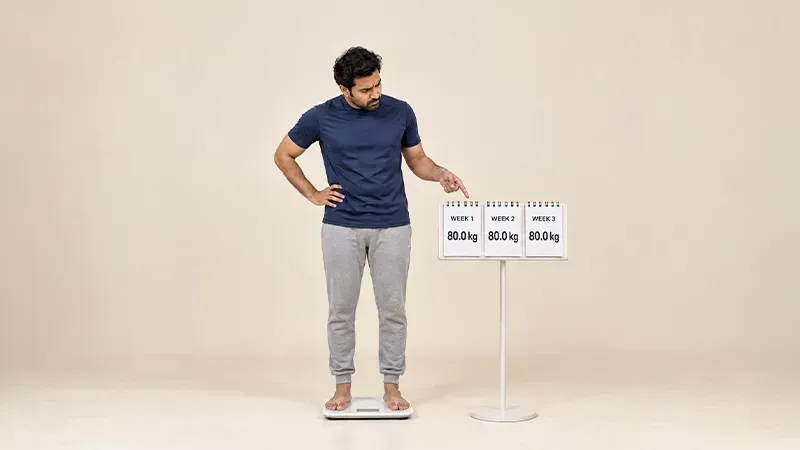
None of this changes the basic principle behind weight management: energy intake needs to be lower than energy used for weight loss to happen. No single food, diet, drink or exercise can directly cause weight loss. Bananas may support weight-management efforts as part of a balanced diet, regular physical activity and a healthy lifestyle.
Which Banana Is Good for Weight Loss?
Ripeness changes a banana's chemistry. As a banana ripens, its starch gradually converts into simple sugars, which is why a green banana tastes starchy and a spotted one tastes sweet.
| Ripeness | Starch and sugar | Effect on blood sugar | Best use |
| Green or barely yellow | High resistant starch, low sugar | Slower, more gradual rise | Cooking, feeling fuller for longer |
| Yellow, fully ripe | Balanced starch and sugar | Moderate rise | Everyday snacking |
| Yellow with brown spots | Mostly sugar, little starch | Faster rise | Baking, smoothies |
Neither one wins outright. It depends on your preferences and your health picture. If you're managing blood sugar, talk to a doctor or registered dietitian before basing decisions on ripeness alone.
What Is the Best Time to Eat Banana for Weight Loss?
There's no officially confirmed best time to eat a banana for weight loss, and little evidence that timing alone changes its effect on body weight. A few patterns work well for many people:
- As a mid-morning or afternoon snack, to help manage hunger between meals.
- Before or after light exercise, since bananas offer easily accessible carbohydrate and potassium.
- Paired with protein, such as yoghurt or nut butter, which may help extend fullness.
What matters more than clock time is how the banana fits into your total daily eating pattern.
How Many Bananas Should You Eat a Day?
Portion size is usually the real question behind banana for weight loss, not the fruit itself. The NHS counts one banana as one portion of your 5 A Day, and for most healthy adults, 1 to 2 bananas a day fits comfortably within a balanced, calorie-controlled diet.
Beyond that, the calories and natural sugar can start to add up like any other food, especially if you eat bananas on top of an otherwise unchanged diet rather than in place of something less nutritious.
Are Banana Shakes, Smoothies and Chips Good for Weight Loss?
How a banana is prepared changes its calorie count considerably, sometimes dramatically, which matters more than most people expect.
Banana Shake for Weight Loss
A shake made with plain milk and a single banana may fit into some calorie-controlled diets, depending on overall calorie intake and nutritional needs. Added sugar, ice cream or a second and third banana push the calorie count up quickly, so the ingredients matter as much as the fruit itself.
Banana Smoothie for Weight Loss
A smoothie built around banana, plain yoghurt and vegetables can be a nutrient-dense, filling option. Fruit juice bases, honey and multiple servings of fruit blended together turn the same smoothie into a much higher-calorie drink than a whole banana ever would be.
Are banana chips good for weight loss?
Generally, no. Most commercial banana chips are deep-fried, often in coconut oil, and sometimes coated in sugar. A 100g serving of commercial banana chips may contain approximately 450-550 calories and around 33g of fat, compared with about 89 calories and virtually no fat in the same weight of fresh banana. That difference alone makes chips a poor stand-in for the whole fruit if weight management is the goal.
What Are the Common Myths About Bananas and Weight Loss?
A few claims about bananas circulate widely enough to be worth addressing directly.
- Myth: Bananas are too sugary for weight loss.
The sugar in a whole banana comes packaged with fibre, potassium and other nutrients, a very different picture from added sugar in processed food. Whole bananas are not something most people need to avoid for weight management.
- Myth: Banana at night causes weight gain.
As covered above, there is no credible evidence that timing alone drives weight gain. Total calories across the day matter far more than the clock.
- Myth: A banana-only diet works for fast weight loss.
Restrictive diets built around a single food are not sustainable and can lead to nutrient gaps. Any early weight loss on such a diet is unlikely to last once normal eating resumes.
- Myth: Green bananas burn fat.
Resistant starch may support fullness and steadier blood sugar, but no food, green banana included, burns fat directly.
Key Takeaways!
So, is a banana good for weight loss? On balance, yes, but it was never going to do the work alone. What tips the scales in your favour is what the banana replaces, how ripe it is, how many you're actually eating, and what you're blending it with.
Treat it as one useful piece of a bigger pattern involving fibre, protein, movement, sleep, rather than a fix in itself, and it may genuinely earn its place in a weight-loss plan. Treat it as a shortcut, and you'll likely be disappointed, not because the banana failed you, but because no single food ever does that job on its own.
Reader Information: This article is for informational purposes only and should not be considered medical, nutritional, or weight-loss advice. Bananas may support weight-management efforts as part of a balanced diet due to their fibre content and nutrient profile, but no single food, diet, drink, or exercise can directly cause weight loss. Individual results may vary based on overall calorie intake, physical activity, health conditions, medications, sleep, and lifestyle factors. People with diabetes, kidney disease, or other medical conditions requiring dietary modifications should consult a qualified healthcare professional or registered dietitian before making significant changes to their diet.