





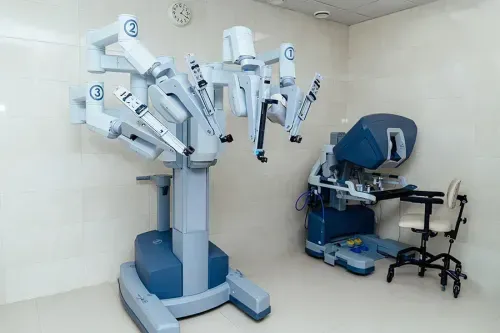
Difference Between Laparoscopic and Robotic Surgery
Laparoscopic vs Robotic Surgery: Key Differences, Benefits & Recovery
In the field of modern surgical procedures, minimally invasive techniques have become the preferred approach for many operations. Among these, laparoscopic surgery and robotic surgery are two prominent methods. While both techniques share the same goal of minimising invasiveness, there are key differences between them.
Key Differences: Laparoscopic vs Robotic Surgery
Let us discuss the main differences between robotic surgery and laparoscopic surgery in the table below:
| Aspect | Robotic Surgery | Laparoscopic Surgery |
| Position of the Surgeon | Near the console | Next to the operation table |
| Dexterity | A high range of motion, as robotic hands can reach unreachable areas | Limited range of motion as doctors' hands cannot reach all areas |
| Surgical Instruments | The surgeon's console, camera, small medical instruments, and endo wrist instruments | Small medical instruments and a camera |
| Incision | Tiny incisions | Tiny incisions |
| Method | The robotic instruments are operated by the surgeon through the console | Surgeons use the instruments they previously inserted into the body |
| Recovery Time | A few weeks | 4-6 weeks |
| Chances of Infection | Rare | Rare |
What is laparoscopic surgery?
Laparoscopic surgery is also known as ‘keyhole surgery’. It gets its name from the minimally invasive method it follows. Surgeons make small incisions on your body through which they insert a laparoscope (a thin tube with a camera) and necessary surgical instruments.
The surgeon operates by watching a high-definition video feed on a monitor and using the instruments manually from outside the body.
What is Robotic Surgery?
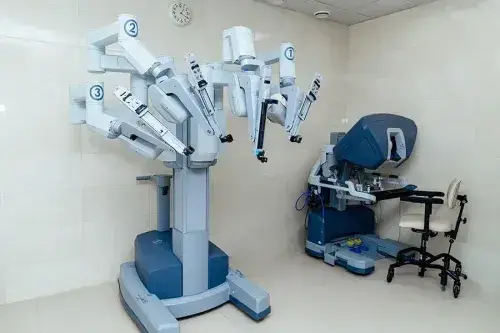
Robotic surgery denotes significant progress in the healthcare technology field. It is a more advanced form of minimally invasive surgery. A surgeon controls a set of robotic arms through a console. They do not touch the medical instruments directly.
Instead, they use controls and foot pedals to manoeuvre the robotic arms with extreme precision. The robotic system translates the surgeon’s hand movements into smaller, more accurate motions.
Advantages and Disadvantages of Laparoscopic Surgery
There are several benefits of laparoscopic surgery. They are:
- Short operating time
- Cost-effective
- Covered by insurance
- Widely available
- Smaller scar
- Minimum pain and bleeding
- Very a few chances of infections
- A quicker recovery time as it is less invasive
- Shorter hospital stay
- Better cosmetic outcomes
- Improved diagnostic accuracy
While it provides various advantages, there are some drawbacks. These are as follows:
- Surgeons suffer from fatigue during long procedures.
- Limited range of motion, as there is a small incision
Advantages and Disadvantages of Robotic Surgery
Robotic surgery, being the pinnacle of medical technology, offers several benefits, such as:
- Enhanced precision
- Superior imaging techniques
- Better ergonomics for the surgeon
- Decreased blood loss
- Quicker recovery time
- May treat a wide range of conditions
- Reduced risk of infection
- Greater range of motion
- Quick healing
- Better prognosis
However, this surgery also has certain disadvantages. They are:
- Expensive procedure
- Limited access and expertise
- Longer preparation time
Which one is better?
Experts do not consider any of the surgeries superior to the other. Both depend on the type of surgery, the complexity of the case, and the resources available. For straightforward procedures, doctors prefer laparoscopic surgery, as they are highly effective and sufficient. However, for more complex operations, doctors may suggest robotic surgery for greater precision and control.
Both laparoscopic and robotic surgeries represent significant advancements in surgical care. They aim to reduce patient trauma, speed up recovery, and improve surgical outcomes.
As technology continues to evolve, robotic systems may become more affordable and widespread. However, laparoscopic surgery remains a cornerstone of minimally invasive treatment and continues to serve millions of patients successfully each year.
Also Read:
→ Difference between Laparoscopy and Laser Surgery
→ Difference Between Liver Cancer and Liver Cirrhosis
→ Difference Between Malaria and Dengue Symptoms
→ Difference Between Mental Health and Mental Illness
HELP CENTRE
Confused? We’ve got the answers
We’re Star Health. We offer the coverage that’s designed to help keep you healthy. It's the care that comes to you, and stays with you.
Laparoscopic surgery is performed using a laparoscope, along with other instruments like trocar, cannula, insufflator, and graspers. On the other hand robotic surgery uses a robotic arm to perform the surgery.
Recovery time for both laparoscopic and robotic surgery is significantly faster than for open surgery and is highly dependent on the specific procedure performed and the patient's overall health. For common procedures, patients can often return to light activities within 1-2 weeks and full recovery may take 4-6 weeks. There is no consistent evidence that one minimally invasive technique has a universally faster recovery than the other.
People Also Search For


Health Insurance Coverage for pre-existing medical conditions is subject to underwriting review and may involve additional requirements, loadings, or exclusions. Please disclose your medical history in the proposal form for a personalised assessment.
This FAQ page contains information for general purpose only and has no medical or legal advice. For any personalized advice, do refer company's policy documents or consult a licensed health insurance agent. T & C apply. For further detailed information or inquiries, feel free to reach out via email at marketing.d2c@starhealth.in







