





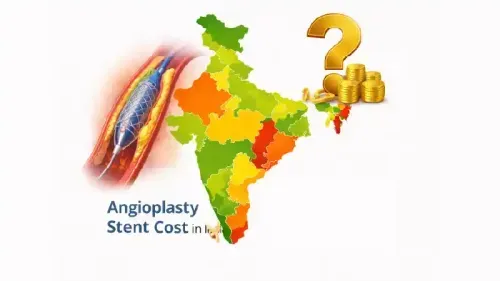
Angioplasty Stent Cost in India - Types & Price Guide
Angioplasty Stent Prices: Types & Government Caps
Angioplasty, also known as percutaneous coronary intervention (PCI), is a minimally invasive procedure to widen narrowed or blocked arteries within the heart. A small balloon mounted on a catheter is inflated to press the plaque against the artery wall. A stent, a tiny mesh tube made of metal, is then placed to keep the artery open and improve blood flow in the long term.
In private hospitals, the cost of the stent is a direct and billable component of the angioplasty procedure. In certain government hospitals or under specific health welfare schemes, stents may be available at highly subsidized rates or for free to eligible patients. In contrast, those opting for private care may encounter varying charges depending on the hospital, the complexity of the procedure, and consultant fees.
Read on to learn more about the cost of a stent in angioplasty.
What are the Types of Stents and Their Costs?
The cost of an angioplasty stent in India depends on the type of stent material and the complexity of the procedure. On average, the price of a coronary angioplasty stent ranges from ₹7,000 to ₹39,000. Follow the given description to understand the prices of different types of stents:
Type of Stent | Details | Approximate Cost |
Bare‑Metal Stents (BMS) | They are simple mesh tubes made of metal, often stainless steel or cobalt‑chromium, inserted into narrowed coronary arteries to prop them open. | ₹7,000 - ₹12,000 |
Drug‑Eluting Stents (DES) | These stents build on the design of bare‑metal stents but add a polymer coating that releases anti‑proliferative medication (such as sirolimus, everolimus, or paclitaxel). | ₹38,000 - ₹42,000 |
Bio‑Absorbable Stents | The stents are made from materials such as polylactic acid or magnesium alloys that gradually dissolve over time, typically within 1–4 years, leaving a natural artery behind. | ₹2,00,000 - ₹4,00,000
|
Note: The prices stated above are approximate and can vary depending on the clinic and healthcare center.
What Factors Affect the Cost of a Stent in Angiography?
The overall expense of undergoing an angioplasty procedure in India can vary significantly depending on multiple contributing factors, including:
- City and Type of Hospital: The location of the hospital and its classification —whether it is a government, private, or tertiary care facility —play a significant role in determining the cost.
- Type and Number of Stents Used: Another key element is the type of stent selected. Drug-eluting stents (DES), which are coated with medication to prevent artery re-narrowing, are more expensive compared to bare-metal stents (BMS), which are simpler and lack medication.
- Use of Advanced Techniques: In certain cases, doctors may need to perform specialized forms of angioplasty, such as renal artery angioplasty, which are more advanced and technically demanding.
- Cost of Consumables and Medical Devices: In addition to the price of the stents themselves, patients are also charged for various consumables used during the procedure.
The cost of a stent in angioplasty can vary, depending on several factors.
Also Read:
→ Heart Hole Surgery Cost in India
→ Gallbladder Stone Surgery Cost in Hyderabad
→ Cost of Cervical Spine Surgery
FAQs
The cost of angioplasty with stent in India varies depending on several factors such as the type of stent used, hospital location, doctor’s expertise, and the patient’s overall heart condition. On average, the total cost ranges between ₹1.5 lakh and ₹3.5 lakh. A single drug‑eluting stent, which is commonly recommended, usually costs between ₹30,000 and ₹60,000, while the remaining amount covers hospital charges, catheterisation lab fees, doctor’s consultation, investigations, medicines, and post‑procedure care. Costs may increase if multiple stents are required or if the procedure is performed in a metro city or a private hospital.
The cost of angioplasty and stent placement can vary widely due to several important factors. One major factor is the type of hospital, as treatments at private hospitals usually cost more than those at government or trust hospitals. The number and type of stents used also plays a big role, drug‑eluting stents are generally more expensive than bare‑metal stents. Patient‑specific factors, such as age, overall health, and presence of complications like diabetes or kidney disease, can increase the cost if additional care is required. The experience of the cardiologist, length of hospital stay, ICU charges, diagnostic tests, medicines, and post‑procedure care also add to the final expense.
Yes, angioplasty is usually covered under health insurance in India, provided certain conditions are met. Most standard health insurance policies include angioplasty as it is considered a medically necessary treatment for blocked or narrowed arteries. The coverage typically helps pay for expenses such as hospital room charges, catheterisation lab fees, stents, doctor’s fees, and medicines used during the procedure. However, coverage is subject to policy terms. Many insurers apply a waiting period, especially if angioplasty is needed due to a pre-existing heart condition. Always check your policy document carefully for exact inclusions and exclusions.
The cost of a stent can vary significantly depending on the type used during angioplasty. In India, the most common types are bare metal stents (BMS), drug‑eluting stents (DES), and bio‑resorbable or bio‑absorbable stents. Bare metal stents are generally the least expensive, as they do not have a drug coating and are used in limited cases today. Drug‑eluting stents cost more because they slowly release medication that reduces the risk of artery re‑blockage, making them the most widely recommended option. Bio‑resorbable stents are usually the costliest, as they are designed to dissolve over time and involve advanced technology. The final cost also depends on factors like the number of stents used, the hospital location, and whether the procedure is done in a private or government facility.
Popular Topics
People Also Search For


Health Insurance Coverage for pre-existing medical conditions is subject to underwriting review and may involve additional requirements, loadings, or exclusions. Please disclose your medical history in the proposal form for a personalised assessment.
This FAQ page contains information for general purpose only and has no medical or legal advice. For any personalized advice, do refer company's policy documents or consult a licensed health insurance agent. T & C apply. For further detailed information or inquiries, feel free to reach out via email at marketing.d2c@starhealth.in







