Steps to Join Chief Minister Health Insurance Scheme
Steps to Join Chief Minister Health Insurance Scheme
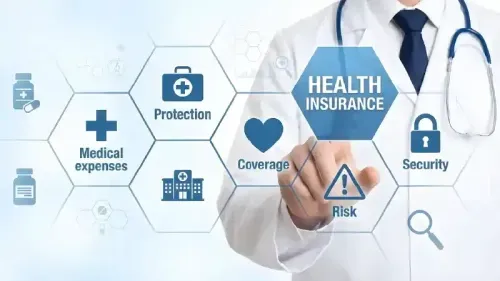
Health insurance schemes may help eligible families meet specified healthcare costs, subject to scheme rules.
Tamil Nadu’s Chief Minister’s Comprehensive Health Insurance Scheme originated in 2009; eligibility and benefits should be checked against the current scheme rules. If you are also interested in enrolling for this scheme, read this further to understand each step of the process in detail.
Know About Chief Minister Health Insurance Card
The scheme aims to support access to specified medical treatments for eligible beneficiaries.
The scheme provides access to eligible hospital treatments and specified procedures under its approved packages.
Eligibility Criteria
The first thing to check before applying for this card is whether you are eligible to apply for the Chief Minister Health Insurance Card. This scheme is meant for low-income families.
In other states and regions, the eligibility criteria vary, but some general features are as follows:
- Income: Provide proof that your income may fall within the limit defined.
- Residency: Residency proof in the state where the scheme is implemented.
- BPL Cardholders: Most of the time, priority is given to the BPL cardholders.
Documents Required
You can apply for the Chief Minister Health Insurance Scheme, after which you will be required to amass different documents. These are normally comprised of:
- Income certificate: You can acquire these from the Village Administrative Officer or local revenue authorities while demonstrating your income.
- Ration Card: The original or photocopy of the ration card is used as a reference for family identity and size.
- Aadhaar Card: Applicants should confirm the identity documents required for each family member under the current enrolment rules.
- Residency Proof: Proof of residency, like voter ID, utility bills, or a domicile certificate.
Enrolment Process
Applicants can follow the steps below, subject to current local enrolment procedures.
Step 1: Visit the Enrolment Centre
Proceed to the assigned enrollment centre in your area. Most of these centres are established in government hospitals or community centres.
Step 2: Document Verification
Submit all your documents to the kiosk operator at the enrolment centre. They will verify your document's authenticity and completeness.
Step 3: Biometric Capture
Capture your biometric information, such as fingerprints, a photograph, and an iris scan. Where biometric verification is required, enrolment staff will explain the applicable steps.
Step 4: Get Enrolled
After all your documents have been verified, your biometric data will be captured, and you will receive confirmation of enrolment. Then you get to take an acknowledgement slip or a temporary card, and later, it will be replaced with the Chief Minister's Health Insurance Card.
Eligible beneficiaries may receive specified cashless services at participating hospitals, subject to applicable scheme limits. By following the above steps, and after ensuring that all documentation is prepared. You can become part of this scheme and cover both yourself and your family to ensure that there is no further stress.
Also read:-
→ How Does Tax Credit Work on Health Insurance
→ What are the top 10 health insurance in India
→ What are the top 10 things to consider before buying health insurance
→ Understanding How Health Insurance Works
FAQs
The CM health insurance scheme helps underprivileged individuals when they are in need of medical treatment. The scheme covers a list of approved treatment packages; verify the current package count and eligibility against the official scheme information. The package also includes hospitalisation, follow-up treatments, diagnostic tests and other related procedures.
The Chief Minister's 5 lakh scheme, also known as Kalaingar Kaappittu Thittam, was launched on 23rd July 2009 to provide free medical care services to eligible families. The main goal behind this scheme was to provide top- notch medical care services to eligible individuals through empanelled government and private hospitals, thereby reducing financial hardship for enrolled families and moving towards universal health coverage by effectively linking with the public health system.
Popular Topics
People Also Search For


This content is intended solely for general health awareness and informational purposes and should not be construed as medical advice, diagnosis, prescription or treatment recommendation. Any reference to diseases, medicines or treatments is illustrative and does not constitute an endorsement or recommendation. Please consult a qualified medical practitioner for appropriate medical advice and treatment. Do not self-medicate or alter any prescribed medication based on this information.